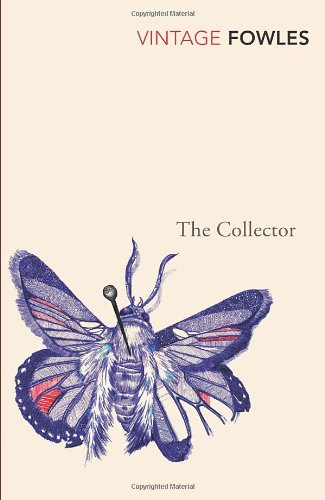
The Collector is not the kind of book I used to read much, it is neither fantasy or mythic fiction, neither YA or children literature, or some fairytale retelling, but is had been recommended to me several times, and it was on so many friends' favorite list that when I saw a used copy at a bookstore I grabbed it, hoping I would like it. And I did. I can safely say that it is one of the best book I have read this year.
The Collector is a chilling story of a kidnapper and his victim and the power struggle and obsessiveness at the core of their relationship. Goodreads informs me that this was hailed as the first modern psychological thriller (it was first published in 1963), and it truly takes you into the depths of its two, and only, characters. Told in two parts, first by the kidnapper a lonely butterfly collector and second by the art student he becomes obsessively in love with and ultimately kidnap, "collect". The contrast between the two voices is one of the thing I loved the most about this novel.
The choice to put the captor's POV first was a great idea. We, the readers, are forced to immerse ourselves in this unassuming, seemingly non-violent and calm individual's mind. We are force to see the events through his eyes, to understand them only through his own rationalization. If we do not completely sympathize with him (at first), it's quite easy to understand him, even as the horror of his actions clashes with the tone of his voice. We are also force to see the victim and her actions through his eyes, and can only go by his own interpretations of her behavior which we know to be unreliable, but know nothing beyond what is told to us. Because it is narrated in the first-person point of you, the narrator himself does not delve into his own psychosis, we are not told why he does the things he does beyond his own twisted rationalizations, we only have his voice to go by. His voice is frank, simple, non-dramatic, which only adds to the spookiness of the whole thing, as we constantly feel like digging between the lines, to understand why, why why, but are not offered any respite, any answer, just the facts of the story unfolding before us.
And then the point of view changes to the victim's. Before it was almost easy to forget about what she must have been thinking, or even feeling, so immerse were we into the kidnaper's own mind, but now we are forced to confront the disjointed, panicked and passionate thoughts of his victim, in the form a journal entries. These entries are personal, meandering, weaving in and out of the present and the past. You feel that in an effort to comfort herself, to keep her mind off things, while she lives in a room, in the basement f a house, at the mercy of a man who feeds her and buys her things, but does not seem to want more than spend time with her (nothing sexual or perverted either), she writes and writes about her life, about her love. Feeling trapped and more and more desperate to be free, she writes about the man that has kidnapped her, yes, but also about art, about friends, about philosophy and the things she wants to do, and the things she regrets, and the things she cares about. And we, as the readers, are forced to realize how alive a person can be. This second part is a bit longer, and less plot-driven, slower, more introverted, a complete contrast with the direct, simple point of view at the beginning, exacerbating the contrast between these two characters as the novel comes to its, ultimately unavoidable, conclusion.
And finally the epilogue, from his point of view again, is chilling to the bone.
I didn't know I would like this book at first, and I am glad I took the chance, even if I hadn't loved it as much as I did, it is a tightly well woven novel that brought shivers to my spine.
Showing posts with label Review. Show all posts
28.11.11
5.7.11
Quick Review: Playing With the Grown-Ups, by Sophie Dahl
Many people I follow on Goodreads seemed to have liked this book, so when I saw it on sale at the bookstore I bought it right away. Plus, I thought the story sounded interesting and different than what I usually read, which I was in the mood for.
Playing With the Grown-Ups is a coming-of-age story. As a young teenager, Kitty loves living in the idyllic English countryside, but her mother Marina, who has now found a new religion, craves excitement and is in a constant search for a kind of happiness which seems all too elusive. Kitty gets caught in a whirlwind of moving, first to boarding school, and then New York, an ashram, and finally London, and finds herself both enamored and mystified by her free-spirited mother whose changing, and often opposite moods seem to dictate her life. After experiences with faith, enlightenment, love, friendship, drugs and pain, Kitty must choose what she wants to do with her life, and the person she really wants to be.
I must say I was disappointed with this book. I wasn't expecting something different, but I did expect to feel more while reading it. It took me a while to figure out why though. The characters were colorful and diverse, quirky and often felt real, and I found no fault in the plot itself. But something made it difficult for me to connect with Kitty, the protagonist. About half-way through the book, I realized that while I wanted to know what was going to happen (and I never really felt like abandoning the book), I also didn't really care. The prose was a bit disconnected as well. Situations and settings changed without any break in paragraphs or chapters, which sometimes made it confusing for a few sentences, and at times it was beautiful in its simplicity but often it felt too clinical and distancing.
In the end, I found it interesting enough, and sometimes fun. It was short and a quick read, but, to me, not quite memorable or moving.
Playing With the Grown-Ups is a coming-of-age story. As a young teenager, Kitty loves living in the idyllic English countryside, but her mother Marina, who has now found a new religion, craves excitement and is in a constant search for a kind of happiness which seems all too elusive. Kitty gets caught in a whirlwind of moving, first to boarding school, and then New York, an ashram, and finally London, and finds herself both enamored and mystified by her free-spirited mother whose changing, and often opposite moods seem to dictate her life. After experiences with faith, enlightenment, love, friendship, drugs and pain, Kitty must choose what she wants to do with her life, and the person she really wants to be.
I must say I was disappointed with this book. I wasn't expecting something different, but I did expect to feel more while reading it. It took me a while to figure out why though. The characters were colorful and diverse, quirky and often felt real, and I found no fault in the plot itself. But something made it difficult for me to connect with Kitty, the protagonist. About half-way through the book, I realized that while I wanted to know what was going to happen (and I never really felt like abandoning the book), I also didn't really care. The prose was a bit disconnected as well. Situations and settings changed without any break in paragraphs or chapters, which sometimes made it confusing for a few sentences, and at times it was beautiful in its simplicity but often it felt too clinical and distancing.
In the end, I found it interesting enough, and sometimes fun. It was short and a quick read, but, to me, not quite memorable or moving.
21.6.11
Quick Review: The Pernderwicks at Point Mouette, by Jeanne Birdsall
I've exhorted my love for the Penderwicks series twice already on this blog, (here & here) and so I was absolutely delighted to read the third instalment of the series, The Penderwicks at Point Mouette. Now, it is not necessary to have read the first two books to understand this one, although you would be missing on some details, and, in my opinion, one of the best part of the series, which is to be witness to the growth of the four sisters at the centre of the story.
In this third instalment, the Penderwicks are splitting up for Summer vacations. Mr. and Mrs. Penderwick are going to England, the eldest Penderwick, Rosalind, is going to New Jersey with her best friend, so that leaves the three youngest Penderwick, Skye, Jane and Batty, as well as their Aunt Claire and the honorary Penderwick Jeffrey (met in the first book) to spend two weeks by the seaside, at Point Mouette, Maine. Of course, charming insanity ensues. Skye finds herself the OAP (Oldest Available Penderwick) and is not ready for such responsibility, Jane stumbles into first love, and Batty discovers her passion, while Jeffrey makes a life-altering discovery.
While cliché, there is no other words that describe this series and books, as charming. It is just charming. The characters have distinctive personalities, all lovable and fun (I am particularly fond of Batty). The plot moves forward quickly, with simple adventures and events, while allowing the characters to grow and expand. To be honest, and particularly in this one, things can get a bit too sweet, in particular when it comes to the adult characters. They are always fun, they always love children and are generally very very kind to a point that is almost unbelievable. But since they are not the main protagonists, I give it a pass. Jeffrey's story line was a bit too stretched for me too, a bit too far fetched, but at the same time was dealt with very well, an in a believable manner, that was quite moving at times. I also missed Rosalind in this one, as she was away, but feel that her absence made sense in the way the books deal with growth.
Overall, I am still in love with this series. It's a perfect quick Summer read and I am already awaiting the next one.
In this third instalment, the Penderwicks are splitting up for Summer vacations. Mr. and Mrs. Penderwick are going to England, the eldest Penderwick, Rosalind, is going to New Jersey with her best friend, so that leaves the three youngest Penderwick, Skye, Jane and Batty, as well as their Aunt Claire and the honorary Penderwick Jeffrey (met in the first book) to spend two weeks by the seaside, at Point Mouette, Maine. Of course, charming insanity ensues. Skye finds herself the OAP (Oldest Available Penderwick) and is not ready for such responsibility, Jane stumbles into first love, and Batty discovers her passion, while Jeffrey makes a life-altering discovery.
While cliché, there is no other words that describe this series and books, as charming. It is just charming. The characters have distinctive personalities, all lovable and fun (I am particularly fond of Batty). The plot moves forward quickly, with simple adventures and events, while allowing the characters to grow and expand. To be honest, and particularly in this one, things can get a bit too sweet, in particular when it comes to the adult characters. They are always fun, they always love children and are generally very very kind to a point that is almost unbelievable. But since they are not the main protagonists, I give it a pass. Jeffrey's story line was a bit too stretched for me too, a bit too far fetched, but at the same time was dealt with very well, an in a believable manner, that was quite moving at times. I also missed Rosalind in this one, as she was away, but feel that her absence made sense in the way the books deal with growth.
Overall, I am still in love with this series. It's a perfect quick Summer read and I am already awaiting the next one.
16.5.11
Quick Review: Teeth - Vampire Tales, ed. by Ellen Datlow & Terri Windling
I've been reading a lot of short stories lately, on and off the web, but I must admit I often get lost in which collections and/or anthologies to buy at the bookstore. But I NEVER hesitate to buy an anthology edited by Ellen Datlow and Terri Windling. I am always impressed, amazed and entertain by their selection. I am particularly fond of their mythic series (which I will post about soon), but was very excited to see they had edited a collection of YA short stories based on vampires. Part of my excitement was due to the fact that I like vampire stories, but have been completely disappointed with the state of vampire fiction in the YA world these past few years (we all know what I'm talking about). So I thought, "Finally!" when I saw the book at the bookstore and grabbed it right away.
Now if you are like me and like vampire mythology (the old and the modern), than this book is for you. The stories in this book range from sweet, romantic, eerie and spooky to dark, brutal and violent. It covers a range of myth and folklore and probably invents a few as well. What I appreciated is that each author approached the subject in different directions, but that you were never really left with a sense of safety. The inherent danger that is vampires, whether they are friends, enemies, parents, children, hunters or preys is always there, hovering over each plot, each character, sometimes more omnipresent, but never really absent. And that's what I liked best. I must say that most of my favourite stories were the more violent, deadly ones, simply because I prefer my vampires that way. More deadly creatures, than romantic interest, or broody reformed undead. But even the stories that were quieter and more contemplative (or sometimes that involved only vampires, therefore removing the immediate death threat a human would feel in their presence), were still somehow interesting for their way they approach the subject. And still this anthology managed to stay in tone with the YA world of vampires. It even included two poems (one by Neil Gaiman, one by Emma Bull), and that seriously made me happy. Poetry, in my opinion, should show up more in the YA adult world of literature (and seriously, if vampires and all their dark mythos aren't showing up in all those angsty teen poems written in the margins of a math book, than teenagers and young adults have change A LOT since I was one - and it really wasn't that long ago)
So. Some favourites included: "Vampire Weather" by Garth Nix, "Late Bloomer", by Suzy McKee Charnas, "Sit the Dead", by Jeffrey Ford, "Sunbleached" by Nathan Ballingrud, "In the Future When All's Well", by Catherynne M. Valente, and "The Perfect Dinner Party" by Cassandra Clare & Holly Black. I also really really liked the very informative introduction on vampire folklore written by both editors.
I really recommend this anthology if you are looking for something a bit different. Surely, in all those nineteen well-crafted stories, there is one for you.
Now if you are like me and like vampire mythology (the old and the modern), than this book is for you. The stories in this book range from sweet, romantic, eerie and spooky to dark, brutal and violent. It covers a range of myth and folklore and probably invents a few as well. What I appreciated is that each author approached the subject in different directions, but that you were never really left with a sense of safety. The inherent danger that is vampires, whether they are friends, enemies, parents, children, hunters or preys is always there, hovering over each plot, each character, sometimes more omnipresent, but never really absent. And that's what I liked best. I must say that most of my favourite stories were the more violent, deadly ones, simply because I prefer my vampires that way. More deadly creatures, than romantic interest, or broody reformed undead. But even the stories that were quieter and more contemplative (or sometimes that involved only vampires, therefore removing the immediate death threat a human would feel in their presence), were still somehow interesting for their way they approach the subject. And still this anthology managed to stay in tone with the YA world of vampires. It even included two poems (one by Neil Gaiman, one by Emma Bull), and that seriously made me happy. Poetry, in my opinion, should show up more in the YA adult world of literature (and seriously, if vampires and all their dark mythos aren't showing up in all those angsty teen poems written in the margins of a math book, than teenagers and young adults have change A LOT since I was one - and it really wasn't that long ago)
So. Some favourites included: "Vampire Weather" by Garth Nix, "Late Bloomer", by Suzy McKee Charnas, "Sit the Dead", by Jeffrey Ford, "Sunbleached" by Nathan Ballingrud, "In the Future When All's Well", by Catherynne M. Valente, and "The Perfect Dinner Party" by Cassandra Clare & Holly Black. I also really really liked the very informative introduction on vampire folklore written by both editors.
I really recommend this anthology if you are looking for something a bit different. Surely, in all those nineteen well-crafted stories, there is one for you.
Labels:
Review,
Short Stories,
YA,
YA Paranormal
2.5.11
Review: The Poison Eaters, by Holly Black
Holly Black is fairly known in the YA world for her urban fantasy novels about fairies as well as in the Middle-Grade world for her Spiderwick Chronicles (with illustrator Tony DiTerlizzi). The first novel I read by her was Tithe, part of her Modern Fairy Tales series and it was also the book that introduced my to YA fairy fiction. I also happen to love short stories, so when I saw the paperback edition of her short story collection at the bookstore, I just couldn't resist. I thought it was a collection of new stories, but soon realized it was an anthology of previously published stories. No matter, as it turned out I had only read three of the twelve stories included in other anthologies, so it all felt pretty new anyway. And it was such a fun read.
The Poison Eaters contains twelve short stories that introduce the reader to a wide range of characters, worlds, and/or fantastical creatures. All of them have a bit of a dark side to them, some more than others. All of them are written in Ms. Black beautiful prose. There are vampires, fairies, an eating-contest with the devil, girls that are both poison and poisoners, book characters coming to life, werewolves, unicorns and more. Each story follows a young protagonist facing a dark, quite often dangerous, always out of the ordinary situation. A lot of them also shows issues often affecting young people (and adults too) such as drugs and homelessness.
Often, the author brought a little twist to otherwise well-known creatures. I especially liked her take on vampirism in "The Coldest Girl in Coldtown" where it is treated more as an infection or a sickness, something usually seen in zombie stories. It probably shouldn't be surprising, come to think of it, as both zombies and vampires are undead. I also really liked "A Reversal of Fortune", about an eating contest with the Devil. It is a nice interpretation of the Trickster theme so often seen in old folktales and fairy tales. "The Night Market" is about fairies in the Philippines and the dangers of bargaining, and insulting, them. "The Coat of Stars", a beautiful story about a young man who must save his lover from the fairies, discover things about himself, and navigates a turbulent family life, was especially touching. Other favourites include "Paper Cuts Scissors" about characters from books coming alive at night through the power of a man, and the boy who wants to free his girlfriend who lock herself in a novel of her own. As well as "The Poison Eaters" about girls especially groomed to be weapons, where only one touch of their skin will bring one's death. Finally, for fans of Ms. Black's Modern Fairy Tales series, "The Land's of Hear Desires" revisit characters from the beloved trilogy, especially focusing on Roiben and Corny. My geeky side also laughed a little and was entirely delighted when a character in the story "In Vodka Veritas" said: "Want to go to Western Plaguelands tonight for a raid? I heard about a sunken temple in Caer Darrow with lots of purple drops", and understood exactly what he meant (I blame my boyfriend for introducing me to MMOs)
The only downside, in my opinion, of The Poison Eaters is that it is entirely too short. Even some of the stories left me wanting more more more. But I guess sometimes that is the point. Such stories are just meant to be a glimpse into a much larger, sinister, and hopeful world, left to our imagination to ponder on.
The Poison Eaters is a perfect little collection to introduce readers to Holly Black's work and her brand of urban fantasy.
The Poison Eaters contains twelve short stories that introduce the reader to a wide range of characters, worlds, and/or fantastical creatures. All of them have a bit of a dark side to them, some more than others. All of them are written in Ms. Black beautiful prose. There are vampires, fairies, an eating-contest with the devil, girls that are both poison and poisoners, book characters coming to life, werewolves, unicorns and more. Each story follows a young protagonist facing a dark, quite often dangerous, always out of the ordinary situation. A lot of them also shows issues often affecting young people (and adults too) such as drugs and homelessness.
Often, the author brought a little twist to otherwise well-known creatures. I especially liked her take on vampirism in "The Coldest Girl in Coldtown" where it is treated more as an infection or a sickness, something usually seen in zombie stories. It probably shouldn't be surprising, come to think of it, as both zombies and vampires are undead. I also really liked "A Reversal of Fortune", about an eating contest with the Devil. It is a nice interpretation of the Trickster theme so often seen in old folktales and fairy tales. "The Night Market" is about fairies in the Philippines and the dangers of bargaining, and insulting, them. "The Coat of Stars", a beautiful story about a young man who must save his lover from the fairies, discover things about himself, and navigates a turbulent family life, was especially touching. Other favourites include "Paper Cuts Scissors" about characters from books coming alive at night through the power of a man, and the boy who wants to free his girlfriend who lock herself in a novel of her own. As well as "The Poison Eaters" about girls especially groomed to be weapons, where only one touch of their skin will bring one's death. Finally, for fans of Ms. Black's Modern Fairy Tales series, "The Land's of Hear Desires" revisit characters from the beloved trilogy, especially focusing on Roiben and Corny. My geeky side also laughed a little and was entirely delighted when a character in the story "In Vodka Veritas" said: "Want to go to Western Plaguelands tonight for a raid? I heard about a sunken temple in Caer Darrow with lots of purple drops", and understood exactly what he meant (I blame my boyfriend for introducing me to MMOs)
The only downside, in my opinion, of The Poison Eaters is that it is entirely too short. Even some of the stories left me wanting more more more. But I guess sometimes that is the point. Such stories are just meant to be a glimpse into a much larger, sinister, and hopeful world, left to our imagination to ponder on.
The Poison Eaters is a perfect little collection to introduce readers to Holly Black's work and her brand of urban fantasy.
Labels:
Review,
Short Stories,
YA,
YA Fantasy,
YA Paranormal
28.4.11
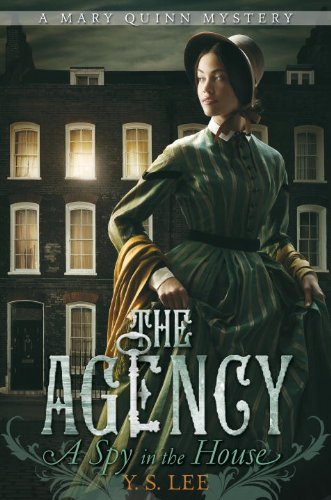
Review: A Spy in the House (The Agency #1), by Y. S. Lee
I have such a weird relationship with mystery novels. I keep being fascinated by them, and really wanting to read them, but every single time I grow impatient and slightly bored with them. I should learn. Nevertheless, I picked up A Spy in the House, the first book in The Agency series, by Y. S. Lee, because it seemed to be about a secret agency run by women, employing women spies, working in Victorian London. Come on, how was I suppose to resist that?
In 1850s London, Mary Quinn, born Lang, is rescued from the gallows and offered an education to become a proper lady at Miss Scrimshaw’s Academy for Girls. Years later, she is offered the singular job of becoming a spy. You see, the school is really a front for an all-female spy group called The Agency. Accepting her new job, Mary first's case is to pretend to be the lady companion of one young lady called Angelica Thorold, while gathering as many information as she can on her potentially thief and fraudulent father. I n the course of her investigation Mary discovers secrets about her past, meets a new ally, interesting and slightly arrogant James Easton, and learns that everybody has secrets, things might always be more dangerous than they seem, and to never ever take people at face value.
I liked this book. For a mystery. Like I said before, I'm not sure I'm the right person to comment objectively on any mystery book I read. I think I am too impatient to ever be able to enjoy them thoroughly (except for Sherlock Holmes stories. They are the exception to the rule). Once I'm half-way through a mystery novel, I usually just want to know how it ends, or who is the culprit, etc. and do not care as much anymore about the process to get there. That said, I actually really enjoyed several aspects of this book. Mary was an interesting character. It was great to see her start as a spy, to see her find her footing, making mistakes, and learning from them. As this is the first book in a series, it would be very interesting to see how her talents as a spy evolve. I'm no specialist of the Victorian period, and therefore could not point out historical inaccuracies even if I wanted to, but I could see, I could feel, that this book was well researched. Of course it helps that the author has a PhD in Victorian literature and culture. I loved all the little details here and there, a sentence, an anecdote, that contributed to make the world of the novel come to life. It always felt real, and not romanticized. That added greatly to my enjoyment of the book.
A second thing I loved was how it balanced fairly well the empowerment of women versus the gender restrictive era in which they lived. In fact, The Agency bases part of its success on the fact that, in those times, women were greatly underestimated. This constant tug and pull between expectations and what was actually possible, was really enjoyable and made me even ponder the feasibility of such an agency ever existing in the past. It was quite exciting at times.
The males interest, as there are bound to be one in YA novels, was actually interesting as well. He was given a voice, a personality and even goals and desires of his own that went beyond the heroine. James and Mary had fun, albeit at time a bit cheesy (but we like a bit of cheese, don't we?) arguments, and lively discussions. Their story was different in some aspects and it was quite refreshing. I love how it, and the book, ended. I also really enjoyed some of the other characters, especially Angelica, the spoiled, sometimes cruel, but ultimately unhappy, young lady, to whom Mary was hired to keep company.
Overall, I thought it was a great book. The mystery was well crafted, I think (even though I couldn't get really interested in it, but, like I said, that could be just me), the characters interesting and believable, the period details fascinating and the novel was well-paced. I would recommend this to anybody who loves historical or mystery novels (or both!). I, myself, will probably read the second book in the series, The Body at the Tower. I guess, I'll never learn.
In 1850s London, Mary Quinn, born Lang, is rescued from the gallows and offered an education to become a proper lady at Miss Scrimshaw’s Academy for Girls. Years later, she is offered the singular job of becoming a spy. You see, the school is really a front for an all-female spy group called The Agency. Accepting her new job, Mary first's case is to pretend to be the lady companion of one young lady called Angelica Thorold, while gathering as many information as she can on her potentially thief and fraudulent father. I n the course of her investigation Mary discovers secrets about her past, meets a new ally, interesting and slightly arrogant James Easton, and learns that everybody has secrets, things might always be more dangerous than they seem, and to never ever take people at face value.
I liked this book. For a mystery. Like I said before, I'm not sure I'm the right person to comment objectively on any mystery book I read. I think I am too impatient to ever be able to enjoy them thoroughly (except for Sherlock Holmes stories. They are the exception to the rule). Once I'm half-way through a mystery novel, I usually just want to know how it ends, or who is the culprit, etc. and do not care as much anymore about the process to get there. That said, I actually really enjoyed several aspects of this book. Mary was an interesting character. It was great to see her start as a spy, to see her find her footing, making mistakes, and learning from them. As this is the first book in a series, it would be very interesting to see how her talents as a spy evolve. I'm no specialist of the Victorian period, and therefore could not point out historical inaccuracies even if I wanted to, but I could see, I could feel, that this book was well researched. Of course it helps that the author has a PhD in Victorian literature and culture. I loved all the little details here and there, a sentence, an anecdote, that contributed to make the world of the novel come to life. It always felt real, and not romanticized. That added greatly to my enjoyment of the book.
A second thing I loved was how it balanced fairly well the empowerment of women versus the gender restrictive era in which they lived. In fact, The Agency bases part of its success on the fact that, in those times, women were greatly underestimated. This constant tug and pull between expectations and what was actually possible, was really enjoyable and made me even ponder the feasibility of such an agency ever existing in the past. It was quite exciting at times.
The males interest, as there are bound to be one in YA novels, was actually interesting as well. He was given a voice, a personality and even goals and desires of his own that went beyond the heroine. James and Mary had fun, albeit at time a bit cheesy (but we like a bit of cheese, don't we?) arguments, and lively discussions. Their story was different in some aspects and it was quite refreshing. I love how it, and the book, ended. I also really enjoyed some of the other characters, especially Angelica, the spoiled, sometimes cruel, but ultimately unhappy, young lady, to whom Mary was hired to keep company.
Overall, I thought it was a great book. The mystery was well crafted, I think (even though I couldn't get really interested in it, but, like I said, that could be just me), the characters interesting and believable, the period details fascinating and the novel was well-paced. I would recommend this to anybody who loves historical or mystery novels (or both!). I, myself, will probably read the second book in the series, The Body at the Tower. I guess, I'll never learn.
16.4.11
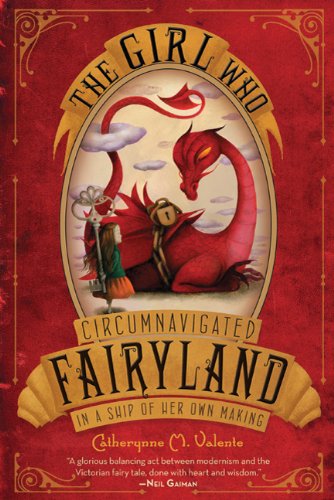
Review: The Girl Who Circumnavigated Fairyland in a Ship of Her Own Making, by Catherynne M. Valente
I'm going to be honest, I love Catherynne Valente's work. Love. This story was first published on her website, and I somehow missed it. When I finally found my way to it, the last part of the book had been taken down in anticipation for its print publication. There was no way I was starting this book without finishing it, so I put down the publication date in my calendar, and waited. And waited. And waited. Finally, by chance, luck, or my good star looking down on me, I was offered to review an advanced copy of the book by the publishers. I was so happy I could barely contain myself. And when I received it, I held it in my hands, preciously, almost scared to open the first page. But what else can one do with a book, but dive in, and see where it takes you? So I did. and, boy, what a trip it took me on. What an adventure!
Twelve-year old September is met one day at her window by a Green Wind (riding a panther). He offers to take her on an adventure into Fairyland, where wonders await her. September slowly finds that her help might be needed there. The Marquess, ruler of Fairyland, is fickle, unpredictable, and even cruel. September makes friends, including a wyvern whose father is a library and a strange boy named Saturday, and offers her help. She soon finds herself on a quest that takes her further than she ever thought she would ever go.
This book did not dissapoint my over-the-top anticipation and expectation in any way. It even surpassed them. I should have known. I should have known it would be more than what I could imagine. It is a testament to Ms. Valente's storytelling talent that she can do that. Not only is her prose absolutely gorgeous, it makes you want to write down or underline a quote every single page, but the way she weaves a story is remarkable.
This book is a treasure. Truly. I can barely find the words to describe how delighted it made me. How I enjoyed the twists and turns of the story, the adventure, the love, the friendship, and the courage. Oh the Bravery of this book, the Bravery of September. She starts as such an interesting, but well-known type of character, like Alice and her Wonderland. But soon, she morphs into her own character, puts her feet down, and become so tangible, she felt like a friend or a little sister. But it was more than that, I wanted to be September, or at the very least it made me wish I could have been like her when I was younger. But September is not the only one stealing my heart in this book, oh no, every character that she meets, all of her friends and ennemies, have something special and interesting. Catherynne M. Valente has this ability to take well-known creatures such as dragons, wyverns, witches and fairies and create them anew, so they become unique with their own mythology, their own world.
The story is told by a third-person omniscient narrator that oftens talks directly to the reader, and even points out details and insights into the process of storytelling itself. But instead of feeling condescending or taking you away from your immersion in the story, it feels familiar and comforting. Like having a story told by a particularly gifted person around a campfire at Summer camp. Or your mom weaving a story while you slowly fall asleep with your head on her stomach, staring at the changing shapes on your ceiling created by your nightlight.
I could go on and on about this book. How it's both for children and adults because it speaks to the same place in our hearts. Or how, even if you are not as enthusiastic about it as I am, it is just a lot of fun. It has funny moments, dark moments, quests, friendships, wonders and adventure. What more can you want?
The Girl Who Circumnavigated Fairyland in a Ship of Her Own Making comes out May 10th 2011. Take note, write it down. Buy yourself a copy.
(thank you to Macmillan Children's Publishing Group for the ARC copy)
Twelve-year old September is met one day at her window by a Green Wind (riding a panther). He offers to take her on an adventure into Fairyland, where wonders await her. September slowly finds that her help might be needed there. The Marquess, ruler of Fairyland, is fickle, unpredictable, and even cruel. September makes friends, including a wyvern whose father is a library and a strange boy named Saturday, and offers her help. She soon finds herself on a quest that takes her further than she ever thought she would ever go.
This book did not dissapoint my over-the-top anticipation and expectation in any way. It even surpassed them. I should have known. I should have known it would be more than what I could imagine. It is a testament to Ms. Valente's storytelling talent that she can do that. Not only is her prose absolutely gorgeous, it makes you want to write down or underline a quote every single page, but the way she weaves a story is remarkable.
This book is a treasure. Truly. I can barely find the words to describe how delighted it made me. How I enjoyed the twists and turns of the story, the adventure, the love, the friendship, and the courage. Oh the Bravery of this book, the Bravery of September. She starts as such an interesting, but well-known type of character, like Alice and her Wonderland. But soon, she morphs into her own character, puts her feet down, and become so tangible, she felt like a friend or a little sister. But it was more than that, I wanted to be September, or at the very least it made me wish I could have been like her when I was younger. But September is not the only one stealing my heart in this book, oh no, every character that she meets, all of her friends and ennemies, have something special and interesting. Catherynne M. Valente has this ability to take well-known creatures such as dragons, wyverns, witches and fairies and create them anew, so they become unique with their own mythology, their own world.
The story is told by a third-person omniscient narrator that oftens talks directly to the reader, and even points out details and insights into the process of storytelling itself. But instead of feeling condescending or taking you away from your immersion in the story, it feels familiar and comforting. Like having a story told by a particularly gifted person around a campfire at Summer camp. Or your mom weaving a story while you slowly fall asleep with your head on her stomach, staring at the changing shapes on your ceiling created by your nightlight.
I could go on and on about this book. How it's both for children and adults because it speaks to the same place in our hearts. Or how, even if you are not as enthusiastic about it as I am, it is just a lot of fun. It has funny moments, dark moments, quests, friendships, wonders and adventure. What more can you want?
The Girl Who Circumnavigated Fairyland in a Ship of Her Own Making comes out May 10th 2011. Take note, write it down. Buy yourself a copy.
(thank you to Macmillan Children's Publishing Group for the ARC copy)
6.4.11
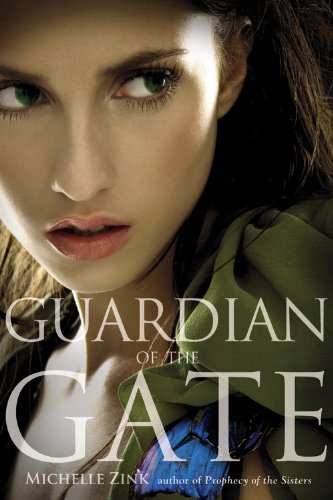
Review: Guardian of the Gate, by Michelle Zink
Guardian of the Gate is the second book in the Prophecy of the Sisters series, click here to read my review of the first book.
Lia and Sonia have been in London for nine months now. They are getting ready to travel to Altus, the mystical island where Lia's aunt will tell them where to find the Prophecy's missing pages. These pages are important to Lia, as they are suppose to tell her how to end the Prophecy and defeat her sister Alice. They are soon joined by Edmond and Luisa and leave on the perilous journey to Altus. They are joined and helped by Dimitri, a boy Lia finds herself attracted to. They are pursued by Hounds and face betrayal within their ranks. It is a long way to Altus and an even longer way to the missing pages, but Lia is determined to see her quest through and end the Prophecy once and for all.
The first book of this series felt a bit gothic and was definitely intriguing, I got sucked into the Prophecy and really wanted to know more about it. The second book was, in my opinion, disappointing. Most of the book follows Lia, her two friends (and Keys to the Prophecy) Sonia and Luisa, her faithful servant Edmond, and a new powerful ally, Dimitri, on their way to Altus. The second book is more of a quest/adventure story than a gothic mystery like the first one. Still, while a bit slow, the plot moves forward steadily and more details are slowly revealed, but very few, and maybe not enough, in the end. Most of all, we are introduced to a new character and love interest, Dimitri. Now, if you have read this blog for a while you know I am highly critical of love stories in YA fiction, but I am not immune to them. I like them when they are well written. This was not one of them. It was one of those almost-love-at-first-sight-I-trust-you-almost-immediately-I-don't-know-why-but-you-bring-me-such-comfort-and-I-feel-safe-with-you relationship. It had almost immediate making out sessions by campfire light, even though this is suppose to be the 19th century. Oh I'm sure people still made out in those times in secret even though it was considered improper. After all, all those stereotypes about quiet gardeners and sexy stable boys must have come from somewhere, but really? It was not written in a believable fashion. Not to me anyway. I was rolling my eyes so hard, I gave myself a headache. Not only that, but Dimitri? He was boring. Look, he was a nice guy, and I like nice guys. They are not present enough in YA fiction. But they are also hard to write. He had no personality. He was brave and strong and loved Lia unconditionally almost immediately. He was ready to die for her, right there and then. He was so much about her, he was the male equivalent of all those empty females characters you see in Hollywood movies that are there to help the hero on their way and offer them emotional support, but have no real life of their own.
That said the love story did not take over the whole plot, which is a good thing. Lia did keep her eyes on her goals, and never really forgot her purpose or quest. In my review of the first book, I presumed I would love Lia more in the sequels, and I was partly right. I did not dislike her, but I was indifferent to her for most of the book. It is only toward the end, when she is finally on her own, that she shows how strong she can be, and in those moments, I really liked her. My favourite characters were still Luisa and Sonia, although their relationship with Lia was obscured by Dimitri, and I would have much prefered if their bond had been more at the forefront of the story like it was in the first book.
This series is told from Lia's first point of view, but I think, for me, it would have been much better if it had been told from a third-person point of view. It could still focused on Lia, but it would have been nice to have some insight into other characters once in a while. For example, Alice is almost absent from this novel, because Lia and her are no longer together. But Alice is such an interesting character, and through the novel all the characters kept mentioning how powerful she was becoming, how evil and determined, but we never saw it truly. It would have been nice to have some chapters from her point of view. Since this is a story about a Prophecy between two sisters on opposing sides, it would have been nice to see both sides. It really made me realize how important the choice of point-of-view in a story can be.
In spite of its fault, though, I really really want to know how the whole story ends. The whole mythology atround the Prophecy is interesting and characters are changing and evolving and I think it will still be entertaining to read the last book, Circle of Fire, coming out this August.
Lia and Sonia have been in London for nine months now. They are getting ready to travel to Altus, the mystical island where Lia's aunt will tell them where to find the Prophecy's missing pages. These pages are important to Lia, as they are suppose to tell her how to end the Prophecy and defeat her sister Alice. They are soon joined by Edmond and Luisa and leave on the perilous journey to Altus. They are joined and helped by Dimitri, a boy Lia finds herself attracted to. They are pursued by Hounds and face betrayal within their ranks. It is a long way to Altus and an even longer way to the missing pages, but Lia is determined to see her quest through and end the Prophecy once and for all.
The first book of this series felt a bit gothic and was definitely intriguing, I got sucked into the Prophecy and really wanted to know more about it. The second book was, in my opinion, disappointing. Most of the book follows Lia, her two friends (and Keys to the Prophecy) Sonia and Luisa, her faithful servant Edmond, and a new powerful ally, Dimitri, on their way to Altus. The second book is more of a quest/adventure story than a gothic mystery like the first one. Still, while a bit slow, the plot moves forward steadily and more details are slowly revealed, but very few, and maybe not enough, in the end. Most of all, we are introduced to a new character and love interest, Dimitri. Now, if you have read this blog for a while you know I am highly critical of love stories in YA fiction, but I am not immune to them. I like them when they are well written. This was not one of them. It was one of those almost-love-at-first-sight-I-trust-you-almost-immediately-I-don't-know-why-but-you-bring-me-such-comfort-and-I-feel-safe-with-you relationship. It had almost immediate making out sessions by campfire light, even though this is suppose to be the 19th century. Oh I'm sure people still made out in those times in secret even though it was considered improper. After all, all those stereotypes about quiet gardeners and sexy stable boys must have come from somewhere, but really? It was not written in a believable fashion. Not to me anyway. I was rolling my eyes so hard, I gave myself a headache. Not only that, but Dimitri? He was boring. Look, he was a nice guy, and I like nice guys. They are not present enough in YA fiction. But they are also hard to write. He had no personality. He was brave and strong and loved Lia unconditionally almost immediately. He was ready to die for her, right there and then. He was so much about her, he was the male equivalent of all those empty females characters you see in Hollywood movies that are there to help the hero on their way and offer them emotional support, but have no real life of their own.
That said the love story did not take over the whole plot, which is a good thing. Lia did keep her eyes on her goals, and never really forgot her purpose or quest. In my review of the first book, I presumed I would love Lia more in the sequels, and I was partly right. I did not dislike her, but I was indifferent to her for most of the book. It is only toward the end, when she is finally on her own, that she shows how strong she can be, and in those moments, I really liked her. My favourite characters were still Luisa and Sonia, although their relationship with Lia was obscured by Dimitri, and I would have much prefered if their bond had been more at the forefront of the story like it was in the first book.
This series is told from Lia's first point of view, but I think, for me, it would have been much better if it had been told from a third-person point of view. It could still focused on Lia, but it would have been nice to have some insight into other characters once in a while. For example, Alice is almost absent from this novel, because Lia and her are no longer together. But Alice is such an interesting character, and through the novel all the characters kept mentioning how powerful she was becoming, how evil and determined, but we never saw it truly. It would have been nice to have some chapters from her point of view. Since this is a story about a Prophecy between two sisters on opposing sides, it would have been nice to see both sides. It really made me realize how important the choice of point-of-view in a story can be.
In spite of its fault, though, I really really want to know how the whole story ends. The whole mythology atround the Prophecy is interesting and characters are changing and evolving and I think it will still be entertaining to read the last book, Circle of Fire, coming out this August.
Labels:
Review,
YA,
YA Paranormal
3.4.11
Review: The Peach Keeper, by Sarah Addison Allen
I will start by saying that I LOVE Sarah Addison Allen's books. I have bought and read and cherished her three previous novels, and I always await the next one with trepidation. Her brand of magical realism and the ability to describe and create perfect settings and atmosphere, as well as giving a sense of hope and joy, even in the darlest scenes of her novels, make her books some of my favourite comfort reading besides my beloved children novels. So it's with little guilt that I broke my book buying ban and went to the store to buy this one. In hardcover.
As for all of her previous books, The Peach Keeper, follows the lives of two women in a small town somewhere in the south of the United States. In this case it follows Willa Jackson and Paxton Osgood in the town of Walls of Water in North Carolina. Willa used to be a joker and a wild young girl, but has now settled in a quieter life, owning an organic sporting goods store, and going to the nursing home to see her grandmother once a week. Paxton is a member of the Osgood clan, the richest family in Walls of Water. She is the president of the Women's Society Club, and organizing its 75th anniversary. She is detail-oriented, extremely well-organized and always in control, and her only true friend is the local dentist, Sebastian. But just as Paxton's brother, Colin, comes back to town to help her, things also start to change. A strange wind makes people reveal their most secret thoughts. Things move and bells ring without anyone touching them. A body is found under the peach tree next the the newly renovated Madam, a house where Willa's grandmother used to live. There is a secret that has been burind for 75 years, that refuses to lay dormant anymore, and Willa and Paxton are determined to figure it out.
The Peach Keeper didn't have as many magical elements, or quirky, singular characters as Sarah Addison Allen's previsou novels, but nevertheless, I loved the story anyway. I loved both Willa and Paxton and their friends/love interests Colin and Sebastian. But my favourtite part of all her novels is still her ability to create such settinsgs and atmosphere that make me want to eat pie, bask in the sun and have candle-lit dinners with friends while crickets sing in the distance. It's the ultimate comfort. Some people might characterize her novels as chick-lit, a term I personnally dislike very much, but, for me, they are not quite so. Sure there are love stories, sure most main characters find love, but her novels, and The Peach Keeper is no exeption, are first and foremost about friendship between women. And it's what I loved the most about this novel. I was more fascinated and interested by the relationship between Willa and Paxton than their relationship with Sebastian and Colin. I also admire Ms. Allen's talent at making secondary and side characters interesting. They jump at you from the page, even though they might have very little time within the story. On the downside, Ms. Allen's books and vision of Southern America, is mostly white and heteronormative. Nothing new, I know. But I hope that for her next novel(s), she introduces non-white protagonists, and non-hetero relationships for her protagonists. Because, somehow, everything else feels so real.
The Peah Keeper is a nice quick comforting read, great for light Summer reading. I also recommend Sarah Addison Allen's previous novels (obviously): Garden Spells, The Sugar Queen and The Girl Who Chased the Moon.
As for all of her previous books, The Peach Keeper, follows the lives of two women in a small town somewhere in the south of the United States. In this case it follows Willa Jackson and Paxton Osgood in the town of Walls of Water in North Carolina. Willa used to be a joker and a wild young girl, but has now settled in a quieter life, owning an organic sporting goods store, and going to the nursing home to see her grandmother once a week. Paxton is a member of the Osgood clan, the richest family in Walls of Water. She is the president of the Women's Society Club, and organizing its 75th anniversary. She is detail-oriented, extremely well-organized and always in control, and her only true friend is the local dentist, Sebastian. But just as Paxton's brother, Colin, comes back to town to help her, things also start to change. A strange wind makes people reveal their most secret thoughts. Things move and bells ring without anyone touching them. A body is found under the peach tree next the the newly renovated Madam, a house where Willa's grandmother used to live. There is a secret that has been burind for 75 years, that refuses to lay dormant anymore, and Willa and Paxton are determined to figure it out.
The Peach Keeper didn't have as many magical elements, or quirky, singular characters as Sarah Addison Allen's previsou novels, but nevertheless, I loved the story anyway. I loved both Willa and Paxton and their friends/love interests Colin and Sebastian. But my favourtite part of all her novels is still her ability to create such settinsgs and atmosphere that make me want to eat pie, bask in the sun and have candle-lit dinners with friends while crickets sing in the distance. It's the ultimate comfort. Some people might characterize her novels as chick-lit, a term I personnally dislike very much, but, for me, they are not quite so. Sure there are love stories, sure most main characters find love, but her novels, and The Peach Keeper is no exeption, are first and foremost about friendship between women. And it's what I loved the most about this novel. I was more fascinated and interested by the relationship between Willa and Paxton than their relationship with Sebastian and Colin. I also admire Ms. Allen's talent at making secondary and side characters interesting. They jump at you from the page, even though they might have very little time within the story. On the downside, Ms. Allen's books and vision of Southern America, is mostly white and heteronormative. Nothing new, I know. But I hope that for her next novel(s), she introduces non-white protagonists, and non-hetero relationships for her protagonists. Because, somehow, everything else feels so real.
The Peah Keeper is a nice quick comforting read, great for light Summer reading. I also recommend Sarah Addison Allen's previous novels (obviously): Garden Spells, The Sugar Queen and The Girl Who Chased the Moon.
25.3.11
Quick Review: Saving Francesca, by Malina Marchetta
The first book I read by Melina MArchetta was Jellicoe Road (click for review). I so loved it that I had to get my hands on her other books. Unfortunately, my local library had just one of them, Saving Francesca. Fortunately, it was so good I didn't mind not being able to read the other ones right away.
Francesca is starting year eleven in a new school that used to be boys only, without any of her old friends and nobody she knows well to support her. On top of that, her lively, energetic mother suddenly cannot get out of bed anymore, and spends her days in her room. Nobody tells Francesca why or what is happening and she feels her world, and family, slowly unravel around her. Used to be passive, and always prefering to keep out of things, Francesca finds that she will have to fight for what she loves, and that more people than she thinks will love her back, unconditionally.
I do not know how Melina Marchetta does it, but I found myself three-quarters in this novel, with no real idea how I got there, and what exactly had happened besides the daily routines of the characters, but knowing that things had changed, things had moved, and I could not stop reading without knowing how it ended. There is a point where I realized I loved those characters, even the small unimportant ones. It just creeped up on me and suddenly I was in love, which I think is a testament to the author's storytelling skills. This book also explores really well what it is like to be a child with a parent who suffers from depression. I know, I've been there. And while it is different for everybody, each family being unique in its own way, there is an understanding of the confusion and pain that comes with something like this, which made me connect (and cry) with the story. That said, it is so clearly written, that anybody would or could understand what Francesca is going through, or at least empathize. It's a book about friendship, love and family and the things, however small, that bind us together. I am really looking forward to any other book by this author.
Francesca is starting year eleven in a new school that used to be boys only, without any of her old friends and nobody she knows well to support her. On top of that, her lively, energetic mother suddenly cannot get out of bed anymore, and spends her days in her room. Nobody tells Francesca why or what is happening and she feels her world, and family, slowly unravel around her. Used to be passive, and always prefering to keep out of things, Francesca finds that she will have to fight for what she loves, and that more people than she thinks will love her back, unconditionally.
I do not know how Melina Marchetta does it, but I found myself three-quarters in this novel, with no real idea how I got there, and what exactly had happened besides the daily routines of the characters, but knowing that things had changed, things had moved, and I could not stop reading without knowing how it ended. There is a point where I realized I loved those characters, even the small unimportant ones. It just creeped up on me and suddenly I was in love, which I think is a testament to the author's storytelling skills. This book also explores really well what it is like to be a child with a parent who suffers from depression. I know, I've been there. And while it is different for everybody, each family being unique in its own way, there is an understanding of the confusion and pain that comes with something like this, which made me connect (and cry) with the story. That said, it is so clearly written, that anybody would or could understand what Francesca is going through, or at least empathize. It's a book about friendship, love and family and the things, however small, that bind us together. I am really looking forward to any other book by this author.
Labels:
Review,
YA,
YA Contemporary
23.3.11
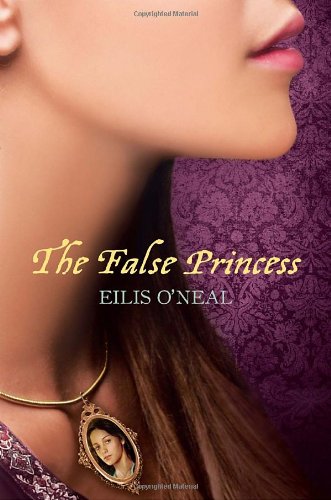
Review: The False Princess, by Eilis O'Neal
I came across this book while browsing possible debut novel for the Debut Author Challenge. I thought the story sounded interesting and it reminded me of a teenage version of some of Gail Carson Levine's books. And beside there is so much YA paranormal these days, that I will almost jumped on any YA Fantasy book I can get my hands on that sounds remotely decent. Fortunately, this book was more than decent, and I am quite happy I took the chance of buying it without knowing much abou it.
Nalia, crown princess of Thorvaldor, learns on her sixteenth birthday that she is really Sinda, a poor peasant girl who was raised as the princess due to a prophecy that said there was a great chance of an attack on the princess' life before she was sixteen. The King and the Queen, worried for their childs's life, agreed on a plan in which the real princess would be hidden for sixteen years, while another girl, born around the same time, would take her place. Now Sinda is sent to her aunt's house in the countryside, far from everything she has ever known. Unable to adapt to her new life (not for lack of trying) and with the discovery of magical talents that has laid latent inside of her for all these years, she makes her way back to the city in hope of becoming a wizard. To her dismay, she soon discover a plot to usurp the throne from the rightful princess. Sinda, with the help of her best friend Kiernan, who never deserted her, is now in a race against the clock to discover who the conspirators are, and stop them before it's too late.
I must say, I thoroughly liked this book. It was was really well paced, the plot constantly moving forward with hardly any slower parts. The plot istself was intricate, but still simple to follow. The characters were, in general, endearing and fun. Sinda was a good protagonist, I enjoyed seeing her grow through the novel. She genuinely tries to adapt to her poor life once outside the castle. Sinda wants more than anything to figure out what and who she is, she wants to prove to herself and the people around her that she can be somebody even if she isn't a princess anymore. After all, how does one cope with being a princess and the future Queen, one moment, and a nobody the next? Sinda is constantly plagued by self-doubt, constantly questioning herself and how people see her, which at times can become a bit annoying. But the beauty of her is that she always rise up to the occasion in the end. I found myself liking the other characters as well, especially Kiernan, the real princess and Philanthra, the wizard who takes her on as her scribe. The False Princess is the story of a girl and her growth, of love and loyalty. Thre wasn't any "wow" moment for me, but it was a solid first novel, a quick read, and quite enjoyable at that. I look forward to more from this author.
For fans of Gail Carson Levine and Robin McKinley.
Nalia, crown princess of Thorvaldor, learns on her sixteenth birthday that she is really Sinda, a poor peasant girl who was raised as the princess due to a prophecy that said there was a great chance of an attack on the princess' life before she was sixteen. The King and the Queen, worried for their childs's life, agreed on a plan in which the real princess would be hidden for sixteen years, while another girl, born around the same time, would take her place. Now Sinda is sent to her aunt's house in the countryside, far from everything she has ever known. Unable to adapt to her new life (not for lack of trying) and with the discovery of magical talents that has laid latent inside of her for all these years, she makes her way back to the city in hope of becoming a wizard. To her dismay, she soon discover a plot to usurp the throne from the rightful princess. Sinda, with the help of her best friend Kiernan, who never deserted her, is now in a race against the clock to discover who the conspirators are, and stop them before it's too late.
I must say, I thoroughly liked this book. It was was really well paced, the plot constantly moving forward with hardly any slower parts. The plot istself was intricate, but still simple to follow. The characters were, in general, endearing and fun. Sinda was a good protagonist, I enjoyed seeing her grow through the novel. She genuinely tries to adapt to her poor life once outside the castle. Sinda wants more than anything to figure out what and who she is, she wants to prove to herself and the people around her that she can be somebody even if she isn't a princess anymore. After all, how does one cope with being a princess and the future Queen, one moment, and a nobody the next? Sinda is constantly plagued by self-doubt, constantly questioning herself and how people see her, which at times can become a bit annoying. But the beauty of her is that she always rise up to the occasion in the end. I found myself liking the other characters as well, especially Kiernan, the real princess and Philanthra, the wizard who takes her on as her scribe. The False Princess is the story of a girl and her growth, of love and loyalty. Thre wasn't any "wow" moment for me, but it was a solid first novel, a quick read, and quite enjoyable at that. I look forward to more from this author.
For fans of Gail Carson Levine and Robin McKinley.
Labels:
Review,
YA,
YA Fantasy
18.3.11
Quick Review: Book of a Throusand Days, by Shannon Hale
I love Shannon Hale's books, and I've been slowly making my way through them, and so it was only natural to grab the copy of Book of a Thousand Days my local library has.
Book of a Thousand Days is a retelling of a little-know fairy tale by the Brothers Grimm called "Maid Maleen" (you can read the online annotated tale HERE) and tells the story of Dashti, a maid, and her mistress Saren, who are locked away in a tower for seven years, and their adventures after through the land of The Eight Realms.
This book is a quick and simple read for middle-grade readers, but would still please many who are older. What I like a lot about Shannon Hale's books, is her ability to quickly build worlds without lengthy descriptions, that come to life and feal real, full of magic and cultural details. This book is set in an imagined land inspired by Central Asia, especially Mongolia, and revolves mostly around two of the eight realms of this land. Dashti, the narrator, is also what they call a mucker, people from the steppes, whose culture is full of healing songs and lyrics, that she uses throughout the book. I could really believe in her roots and the land she inhabited. I could see these cities and believe in their Gods and Goddesses. The book is told in diary form, from Dashti's point of view, and her voice is simple (sometimes too simple), but often engaging. It's a tale of survival and love and mystery, but mostly it is a tale of loyalty. Saren is not an easy mistress, she is fragile and broken and fearful, refusing to do many things, prone to crying and shaking. She is wounded by something, and it is only toward the end of the book that we understand why. But always Dahsti cares for her, sing to her, and protects her.
I cared about the story, but I must say it took me a while to care about the characters, especially Dashti. She was brave and honorable, but too complient at the beginning (which is understandable from a servant, but still). She did eventually raised up to her full potential and I was literally cheering for her at the conclusion and climax of the story. In the end, though, I just wanted more. More details, more adventures, more substance. But this is a middle-grade book, more similar to Shannon Hale's Princess Academy, than her Books of Bayern series. Nevertheless, I enjoyed it a lot, and had great time reading it.
Book of a Thousand Days is a retelling of a little-know fairy tale by the Brothers Grimm called "Maid Maleen" (you can read the online annotated tale HERE) and tells the story of Dashti, a maid, and her mistress Saren, who are locked away in a tower for seven years, and their adventures after through the land of The Eight Realms.
This book is a quick and simple read for middle-grade readers, but would still please many who are older. What I like a lot about Shannon Hale's books, is her ability to quickly build worlds without lengthy descriptions, that come to life and feal real, full of magic and cultural details. This book is set in an imagined land inspired by Central Asia, especially Mongolia, and revolves mostly around two of the eight realms of this land. Dashti, the narrator, is also what they call a mucker, people from the steppes, whose culture is full of healing songs and lyrics, that she uses throughout the book. I could really believe in her roots and the land she inhabited. I could see these cities and believe in their Gods and Goddesses. The book is told in diary form, from Dashti's point of view, and her voice is simple (sometimes too simple), but often engaging. It's a tale of survival and love and mystery, but mostly it is a tale of loyalty. Saren is not an easy mistress, she is fragile and broken and fearful, refusing to do many things, prone to crying and shaking. She is wounded by something, and it is only toward the end of the book that we understand why. But always Dahsti cares for her, sing to her, and protects her.
I cared about the story, but I must say it took me a while to care about the characters, especially Dashti. She was brave and honorable, but too complient at the beginning (which is understandable from a servant, but still). She did eventually raised up to her full potential and I was literally cheering for her at the conclusion and climax of the story. In the end, though, I just wanted more. More details, more adventures, more substance. But this is a middle-grade book, more similar to Shannon Hale's Princess Academy, than her Books of Bayern series. Nevertheless, I enjoyed it a lot, and had great time reading it.
Labels:
Fairytale,
MG,
MG Fantasy,
Retelling,
Review
16.3.11
Review: The Betrayal of Maggie Blair, by Elizabeth Laird
This is a review of a Digital ARC, provided by Houghton Mifflin Harcourt through netgalley.com
I generally do not read a lot of historical novels unless there are some element of fantasy as well, but I do enjoy stories taking place during certain eras and/or events. I am also a bit fascinated by the witch hunts and trials that happened in Europe and New England during the 17th century and this is precisely why I requested this book and was very interested in reading it.
The novel tells the story of sixteen-year old Maggie Blair who lives with her very angry and spiteful grandmother on the island of Bute in seventeenth-century Scotland. The first third of the novel deals with her life on the island, the tensions between the inhabitants and her grandmother and the subsequent accusations of witchcraft. Maggie finds herslef accused and sentenced to death and is forced to flea the island. She takes refuge in her uncle's house on the mainland. There she thinks she can finally lead a peaceful life, but trouble seems to follow her. Her uncle Hugh is a Covenanter, a group of Scottish men and women who want a church free of the King's rule. By refusing to akcnowledge the King as the head of the Church and to attend any services lead by any royal-appointed bishop, they were soon fined, persecuted and even executed. Maggie finds herself more and more involved, never sure where she stands in her beliefs, but still willing to risk her own life to save her uncle and his family.
The Betrayal of Maggie Blair is, in my opinion, a fascinating YA historical novel. This was partly due, I must admit, to my total ignorance of the history of the Covenanters (presbyterians) in Scotland, and I was so happy to learn more about the subject. I thought the book was a bit too long, though. It's hard to say why as I look back on it, because the story always moved forward, there rarely were any idle moments or unnecessary long descriptions. It did cover a lot of time and events, from Maggie's life on the island, to her life with her uncle, to her quest to help him, and back. But I must say that I was immerse in it nonetheless, I read it relatively fast, and I absolutely needed to know how it would finish. There is no love story in this novel (what a change!) and is purely the story of a girl's journey and of a specific period in Scotlnad's history.
There was a disconnect between the first and second part of the book. While both dealt with religious persecutions of two different kinds, one born of hatred, ignorance and fear, the other out of power and control, plot-wise they felt almost unrelated. Maggie could have had any other reason to see her uncle without having to flea due to false accusations of witchcraft. The only connection between the two parts was the character of Maggie herself and her emotional and psychological growth spurred by all of these events. As a protagonist Maggie is well developed, starting as an uneducated, fearful and slowly developing into a smart and braver young women. Her growing process was slow and sometimes frustrating, but it felt true at the same time. I sometimes wanted her to be more proactive, more outspoken, just more, but then I realized I was comparing her to all those fantasy heroines I like, not to what a seventeenth-century Scottish girl would be. Once I realized my mistake, I was able to appreciate her more. In the end, I liked this book and it did make me want to maybe pick up more historical novels in the future.
This book will be published April 18th 2011. See the Goodreads page, to add it to your to-read list!
I generally do not read a lot of historical novels unless there are some element of fantasy as well, but I do enjoy stories taking place during certain eras and/or events. I am also a bit fascinated by the witch hunts and trials that happened in Europe and New England during the 17th century and this is precisely why I requested this book and was very interested in reading it.
The novel tells the story of sixteen-year old Maggie Blair who lives with her very angry and spiteful grandmother on the island of Bute in seventeenth-century Scotland. The first third of the novel deals with her life on the island, the tensions between the inhabitants and her grandmother and the subsequent accusations of witchcraft. Maggie finds herslef accused and sentenced to death and is forced to flea the island. She takes refuge in her uncle's house on the mainland. There she thinks she can finally lead a peaceful life, but trouble seems to follow her. Her uncle Hugh is a Covenanter, a group of Scottish men and women who want a church free of the King's rule. By refusing to akcnowledge the King as the head of the Church and to attend any services lead by any royal-appointed bishop, they were soon fined, persecuted and even executed. Maggie finds herself more and more involved, never sure where she stands in her beliefs, but still willing to risk her own life to save her uncle and his family.
The Betrayal of Maggie Blair is, in my opinion, a fascinating YA historical novel. This was partly due, I must admit, to my total ignorance of the history of the Covenanters (presbyterians) in Scotland, and I was so happy to learn more about the subject. I thought the book was a bit too long, though. It's hard to say why as I look back on it, because the story always moved forward, there rarely were any idle moments or unnecessary long descriptions. It did cover a lot of time and events, from Maggie's life on the island, to her life with her uncle, to her quest to help him, and back. But I must say that I was immerse in it nonetheless, I read it relatively fast, and I absolutely needed to know how it would finish. There is no love story in this novel (what a change!) and is purely the story of a girl's journey and of a specific period in Scotlnad's history.
There was a disconnect between the first and second part of the book. While both dealt with religious persecutions of two different kinds, one born of hatred, ignorance and fear, the other out of power and control, plot-wise they felt almost unrelated. Maggie could have had any other reason to see her uncle without having to flea due to false accusations of witchcraft. The only connection between the two parts was the character of Maggie herself and her emotional and psychological growth spurred by all of these events. As a protagonist Maggie is well developed, starting as an uneducated, fearful and slowly developing into a smart and braver young women. Her growing process was slow and sometimes frustrating, but it felt true at the same time. I sometimes wanted her to be more proactive, more outspoken, just more, but then I realized I was comparing her to all those fantasy heroines I like, not to what a seventeenth-century Scottish girl would be. Once I realized my mistake, I was able to appreciate her more. In the end, I liked this book and it did make me want to maybe pick up more historical novels in the future.
This book will be published April 18th 2011. See the Goodreads page, to add it to your to-read list!
Labels:
Review,
YA,
YA Historical
12.3.11
Quick Review: The Year of Secret Assignments, by Jaclyn Moriarty
This is one of those rare YA contemporary that I read (I'm slowly reading more of them), and it happens to be written yet again by an Australian author (the preicous book was Jellicoe Road, by Melina Marchetta). This is the second book I read by Jaclyn Moriarty after The Spell Book of Listen Taylor, which I thouroughly enjoyed and recommned. Since I had liked the first book, I was prompted to borrow another book of hers at the library and am very glad I did.
The entirety of The Year of Secret Assignments is told through letters, emails, notes, and journal entries that the characters exchange between each other. The book follows three best friends, Cass, Em and Lyd, as they start corresponding with three boys as part of an English exchange program between their two high schools who are too often at odds with each other. Ensues a series of hilarious and touching situations as the characters learn about each other and help each other in their hour of need.
I really enjoyed this book. It was quick and funny. I was iniatially scared that it would be too much for teenagers and that I would not be able to relate. So often YA authors try to sound like teenagers, but end up sounding silly and like adults who try to sound like teenagers, but I found that this was not the case with Jaclyn Moriarty. She gave all of her characters distinctive voices, never entangling herself in too much slang and gimmicks to try and make them sound like teenagers, and yet they felt like teenagers. This made them infinitely more endearing to me and proves that the author has very good characterization skills. And while there was romance and heartbreak, the book was first and foremost about friendship. About three girls who, even though different, love each other more than anything and would do anything to help and protect one another. And this is what made me love this book in the end. Too often nowadays YA fiction is solely about romance, espcially when novel have female protagonists, as if that's all young women really want, and forget about the true love that lies in friendship. I find friendship stories more interesting and lasting than most romantic stories and I am glad that the author showed that in her novel. I'll be sure to pick up her other books on my next trip to the library.
The entirety of The Year of Secret Assignments is told through letters, emails, notes, and journal entries that the characters exchange between each other. The book follows three best friends, Cass, Em and Lyd, as they start corresponding with three boys as part of an English exchange program between their two high schools who are too often at odds with each other. Ensues a series of hilarious and touching situations as the characters learn about each other and help each other in their hour of need.
I really enjoyed this book. It was quick and funny. I was iniatially scared that it would be too much for teenagers and that I would not be able to relate. So often YA authors try to sound like teenagers, but end up sounding silly and like adults who try to sound like teenagers, but I found that this was not the case with Jaclyn Moriarty. She gave all of her characters distinctive voices, never entangling herself in too much slang and gimmicks to try and make them sound like teenagers, and yet they felt like teenagers. This made them infinitely more endearing to me and proves that the author has very good characterization skills. And while there was romance and heartbreak, the book was first and foremost about friendship. About three girls who, even though different, love each other more than anything and would do anything to help and protect one another. And this is what made me love this book in the end. Too often nowadays YA fiction is solely about romance, espcially when novel have female protagonists, as if that's all young women really want, and forget about the true love that lies in friendship. I find friendship stories more interesting and lasting than most romantic stories and I am glad that the author showed that in her novel. I'll be sure to pick up her other books on my next trip to the library.
Labels:
Review,
YA,
YA Contemporary
8.3.11
Review: The Lost Garden, by Helen Humphreys
I love stories about gardens, that involve gardens, or where the setting is in a garden. So I could not resist picking up this book and having a look at it. The story sounded interesting and intriguing as well. And oh, how I wasn't dissapointed. I got so much more than what I was expecting.
It's England, 1941, and London is being destroyed by the Blitz. Gwen Davis, our narrator and protagonist, is a 35 year old horticulturist. Solitary and better with plants than she is with people, Gwen nevertheless volunteers to move to an estate in the Devon countryside to lead a team of young women in growing crops for the war effort. There she finds herself overwhelmed at first by her inadequacy and lack of leadership. With time, her relationship with Jane, a young women waiting for her fiance missing in action, who loves too much and passionately and is a bit too wild, and with Raley, a Canadian soldier posted with the rest of his regiment in the house nearby, waiting to be deployed, will change her forever. She also finds a lost garden, hidden on the estate and take it upon herself to restore it and discover the love story it seems to tell, a story which, in a way, will become her own.
I loved Gwen from the start. Shy, solitaty, unsure of herself except when it comes to her knowledge of plants, she writes letter to Virginia Woolf in her head, and puts the volumes of The Genus Rosa (an encyclopedia of all the roses known to man) on her body when she lies in bed to calm herself. She grows and learns about love and loss and coming to terms with ones past and fear of intimacy. This novel is mostly about loss and love which are almost the same thing when you live in times of war. It deals with the fear of the soldiers about to leave, the fear of the ones left behing, the loss of home and family, and the things we cling to in an effort to make sense of things that just don't. But mostly, though, it was so brillantly and beautifully written. I love Helen Humphreys' prose, poetic and fluid, with moments of such intense beauty and truth at times. Sure sometimes it might have been a bit cheesy, but I never minded. It swept me up from the first page, and even though it lulled a bit in the middle, I still didn't want to stop reading. It wasn't a long novel at all, not even 200 pages, but it felt utterly complete, and still open to so much more. I borrowed this book from the library, but I think I'll buy it for myself so I can reread it as much as I want.
I'll finished with a quote from the very beginning of the book which I think sets the tone beautifully and made me want to just keep reading
It's England, 1941, and London is being destroyed by the Blitz. Gwen Davis, our narrator and protagonist, is a 35 year old horticulturist. Solitary and better with plants than she is with people, Gwen nevertheless volunteers to move to an estate in the Devon countryside to lead a team of young women in growing crops for the war effort. There she finds herself overwhelmed at first by her inadequacy and lack of leadership. With time, her relationship with Jane, a young women waiting for her fiance missing in action, who loves too much and passionately and is a bit too wild, and with Raley, a Canadian soldier posted with the rest of his regiment in the house nearby, waiting to be deployed, will change her forever. She also finds a lost garden, hidden on the estate and take it upon herself to restore it and discover the love story it seems to tell, a story which, in a way, will become her own.
I loved Gwen from the start. Shy, solitaty, unsure of herself except when it comes to her knowledge of plants, she writes letter to Virginia Woolf in her head, and puts the volumes of The Genus Rosa (an encyclopedia of all the roses known to man) on her body when she lies in bed to calm herself. She grows and learns about love and loss and coming to terms with ones past and fear of intimacy. This novel is mostly about loss and love which are almost the same thing when you live in times of war. It deals with the fear of the soldiers about to leave, the fear of the ones left behing, the loss of home and family, and the things we cling to in an effort to make sense of things that just don't. But mostly, though, it was so brillantly and beautifully written. I love Helen Humphreys' prose, poetic and fluid, with moments of such intense beauty and truth at times. Sure sometimes it might have been a bit cheesy, but I never minded. It swept me up from the first page, and even though it lulled a bit in the middle, I still didn't want to stop reading. It wasn't a long novel at all, not even 200 pages, but it felt utterly complete, and still open to so much more. I borrowed this book from the library, but I think I'll buy it for myself so I can reread it as much as I want.
I'll finished with a quote from the very beginning of the book which I think sets the tone beautifully and made me want to just keep reading
But what is love if not instant recognition? A moment of being truly equal to something. What I recognized in this place, from the moment I arrived here, was something within myself that I didn't even know was there. Something under the skin, in the blood. A pulse of familiarity. The wild, lovely clutter of London. Small streets that twisted like rivers. Austere stone cathedrals. The fast muddy muscle of the Thames, holding the city apart from itself; the tension of that moving gap, palpable, felt. I have leaned over the stone balustrade of the Embankment in the dark, the true dark now of the blackouts when even starlight is an act of treachery. In blacked-out London, people, once familiar with the city, bump along the streets, fumbling from building to building as though blind. But I have stood beside the Thames and felt it there, twining beneath my feet like a root. But this is what can no longer be trusted. Everyday the landscape is radically altered. House become holes. Solids become spaces. Anything can dissapear overnight. How can love survive this fact?
26.2.11
Quick Review: The Mysterious Howling, by Maryrose Wood
The Mysterious Howling, the first book in The Incorrigible Children of Ashton Place series is a fun little book, a delightful mix of Jane Eyre, Mary Poppins and Lemony Snicket.
Penelope Lemley, 15 years old and recent graduate of the Swanburne Academy for Poor Bright Females, has been assigned to Ashton Place, a grand house in the countryside, where she is to take care of three children as their governess. These siblings, two boys and one girl, are not in fact ordinary children. Found in the woods by Lord Ashton, they were, it seems, raised by wolves. Named Alexander, Beowulf and Casseopeia they hardly know a word of English, like to walk on all fours, howl as loud as they can, and get really excited if any squirrels come near them. Miss Lumley, aid by her knowledge and love of animals, set immmediately to teach them all she can. Until the Mistress of the house announces that the children shoul be ready to be presented at the grand Christmas party she is organizing, and Penelope fears that catastrophe will ensue.
The book is a quick and engaging read. Told by an omniscient narrator that talks directly to the reader, it recalls the work of Lemony Snicket, although less dark and more light-hearted. Penelope is an engaging character in all of her love of poetry, animals and good manners. Strong-willed and quite inventive she quickly gains the children to her side. The children themselves become fast likable and sweet, with all their howling, special language and love of storytelling. I especially like certain scenes during the Christmas party, that made me laugh. There seem to be more than one mystery surrounding Ashton Place, the children and Penelope herself that are only hinted at in this first book. There is also several commentaries on writing, social manners and expectation versus reality. I will definitely read the sequel, coming out next week on March 1st calle The Hidden Gallery.
Penelope Lemley, 15 years old and recent graduate of the Swanburne Academy for Poor Bright Females, has been assigned to Ashton Place, a grand house in the countryside, where she is to take care of three children as their governess. These siblings, two boys and one girl, are not in fact ordinary children. Found in the woods by Lord Ashton, they were, it seems, raised by wolves. Named Alexander, Beowulf and Casseopeia they hardly know a word of English, like to walk on all fours, howl as loud as they can, and get really excited if any squirrels come near them. Miss Lumley, aid by her knowledge and love of animals, set immmediately to teach them all she can. Until the Mistress of the house announces that the children shoul be ready to be presented at the grand Christmas party she is organizing, and Penelope fears that catastrophe will ensue.
The book is a quick and engaging read. Told by an omniscient narrator that talks directly to the reader, it recalls the work of Lemony Snicket, although less dark and more light-hearted. Penelope is an engaging character in all of her love of poetry, animals and good manners. Strong-willed and quite inventive she quickly gains the children to her side. The children themselves become fast likable and sweet, with all their howling, special language and love of storytelling. I especially like certain scenes during the Christmas party, that made me laugh. There seem to be more than one mystery surrounding Ashton Place, the children and Penelope herself that are only hinted at in this first book. There is also several commentaries on writing, social manners and expectation versus reality. I will definitely read the sequel, coming out next week on March 1st calle The Hidden Gallery.
Labels:
MG,
MG Historical,
Review
22.2.11
Review: Swamplandia!, by Karen Russell
I had loved Karen Russell's collection of short stories (published in 2006) called St. Lucy's Home for Girls Raised by Wolves, and had been waiting for something new from her since then. You can imagine my joy when I learned that she had a novel coming out this February (finally!) based on one of the stories in her collection called "Ava Wrestles the Alligator". I must admit that I was a bit dissapointed because would have prefered she had based her novel on the title story of her collection, as it was my favourite. Nevertheless, the world of "Ava Wrestles the Alligator" seemed to hold much promises with its swampy Florida setting, alligator-wrestling family and ghost-dating sister. Ava sounded like a young little heroine that I would be glad to know more about and learned to love.
Swamplandia! tells the story of an alligator-wrestling family, the Bigtrees, living in a swamp on an island by teh coast of Florida. It follows the decline of their park as suddenly things start to fall apart and the world that they know does not make sense anymore. It especially focuses on the three children: Kiwi, Ossie and Ava. Kiwi, the oldest, decides to leave for the mainland. Bright and sharp, he dreams of one day going to university, but first he must learn to navigate the world he was never a part of, learn to fit in. Angry at his father he also has to figure out what he wants and what he loves and how to keep these things to drift apart in opposite directions. Ossie deals with loss and change much differently. Having read a book on spiritualism, she starts casting spells and communicating with ghosts, leaving on "dates" during the night, meeting boyfriends. As the days pass, she finds herself more and more involve with her ghostly boyfriend, until the day she decides to elope to the underworld. Ava is the alligator-wrestler of the three siblings, and the narrator. She holds fast to the knowledge passed down to her by her mother. She finds herself flundering, grasping at the remains of what her life used to be, dreaming of restoring the glory of their park Swamplandia!, hoping that things could be normal again, but knowing that they seem to be irrevocably changed. Until the dreadful day where her sister leaves, and she decides to go after her, to rescue her from the underworld and the ghosts that haunts her.
I liked Swamplandia! a lot. Karen Russell's prose is amazing, full of details and imageries that made the world of the novel sharp in its clarity. I thought it was a bit too long, though. I felt that, in parts, it was heavy and harder to get through. Like dredging through the swamps the characters inhabit.
I was also a bit dissapointed in the way it was told. One of the thing I had loved about Karen Russell's stories was that they had an aura of mystery. A dreamy-like substance, that even in the most banal and reality-bound passages, made the edges of the worlds they depicted blurry and enchanting. They let you sometimes unsure if things were dreams or reality or a mix of both. On the other hand, Swamplandia!, maybe because of its lenght, is stark, and real. Too real sometimes. It is full of pain and loss and hope and strenght, but it somehow never gave me that feeling of otherworldliness that I was expecting. In fact, it sometimes grabbed me by the throat with its clear edges and sharpness. Not to say it is a bad thing, on the contrary it was often so so beautiful, not just what I was expecting.
Kiwi was my favourite character. This seventeen years old boy, caught between being a boy and a man, between the life he wanted on the mainland and the life and people he loved he had left behind. A boy who learns new words everyday, but never really pronunces them correctly, who builds bridges made of pastas to accompany a three paragraphs essay homework. And also Ava, brave, strong, little Ava, who did wrestle an alligator, but not the kind I, or she, was expecting. I think this story will stay with me for a while, even if I was dissapointed and it was a bit too long and too sharp. There was a truth there that appealed to me even then.
Swamplandia! tells the story of an alligator-wrestling family, the Bigtrees, living in a swamp on an island by teh coast of Florida. It follows the decline of their park as suddenly things start to fall apart and the world that they know does not make sense anymore. It especially focuses on the three children: Kiwi, Ossie and Ava. Kiwi, the oldest, decides to leave for the mainland. Bright and sharp, he dreams of one day going to university, but first he must learn to navigate the world he was never a part of, learn to fit in. Angry at his father he also has to figure out what he wants and what he loves and how to keep these things to drift apart in opposite directions. Ossie deals with loss and change much differently. Having read a book on spiritualism, she starts casting spells and communicating with ghosts, leaving on "dates" during the night, meeting boyfriends. As the days pass, she finds herself more and more involve with her ghostly boyfriend, until the day she decides to elope to the underworld. Ava is the alligator-wrestler of the three siblings, and the narrator. She holds fast to the knowledge passed down to her by her mother. She finds herself flundering, grasping at the remains of what her life used to be, dreaming of restoring the glory of their park Swamplandia!, hoping that things could be normal again, but knowing that they seem to be irrevocably changed. Until the dreadful day where her sister leaves, and she decides to go after her, to rescue her from the underworld and the ghosts that haunts her.
I liked Swamplandia! a lot. Karen Russell's prose is amazing, full of details and imageries that made the world of the novel sharp in its clarity. I thought it was a bit too long, though. I felt that, in parts, it was heavy and harder to get through. Like dredging through the swamps the characters inhabit.
I was also a bit dissapointed in the way it was told. One of the thing I had loved about Karen Russell's stories was that they had an aura of mystery. A dreamy-like substance, that even in the most banal and reality-bound passages, made the edges of the worlds they depicted blurry and enchanting. They let you sometimes unsure if things were dreams or reality or a mix of both. On the other hand, Swamplandia!, maybe because of its lenght, is stark, and real. Too real sometimes. It is full of pain and loss and hope and strenght, but it somehow never gave me that feeling of otherworldliness that I was expecting. In fact, it sometimes grabbed me by the throat with its clear edges and sharpness. Not to say it is a bad thing, on the contrary it was often so so beautiful, not just what I was expecting.
Kiwi was my favourite character. This seventeen years old boy, caught between being a boy and a man, between the life he wanted on the mainland and the life and people he loved he had left behind. A boy who learns new words everyday, but never really pronunces them correctly, who builds bridges made of pastas to accompany a three paragraphs essay homework. And also Ava, brave, strong, little Ava, who did wrestle an alligator, but not the kind I, or she, was expecting. I think this story will stay with me for a while, even if I was dissapointed and it was a bit too long and too sharp. There was a truth there that appealed to me even then.
21.2.11
Review: Bithmarked, by Caragh M. O'Brien
I quite enjoy the afflux of distopian novels in young adult literature that has been happening these past few years and I've been trying to read as many as I can, or at least read about such novels, as there is something quite fascinating in the high interest and growing following these books garner within the teen community (as well as others, like me, who enjoy young adult literature). The first book I read in 2011 was such book: Birthmarked, by Caragh M. O'Brien.
Far in the furture, after extreme climate changes, society is now divided between those who live inside the wall, a rich, abundant and luxuriant city, and those who live outside the wall, like our heroine Gaia Stone, poor, often malnourish but hard working people. Gaia is a sixteen years old midwife, who has learned everything she knows from her mother. Every month she needs to "advanced" a quota of babies, to be taken into the Enclave (inside the wall) to be raised there by new parents. Things go well for Gaia, until one night where she witnesses the agonizing pain of a mother who refuses to let go of her baby, and where her parents are taken prisoners into the Enclave. Now alone, Gaia is determined to find her parents, and in the process is herself arrested and imprisoned. Gaia is then faced with difficult moral choices, and the even more difficult task of unraveling the layers of secrets of this cruel, well-organized society she inhabits.
The world of Bithmarked, with, at its core, problems and issues of fertility and genetics can easily remind the reader of such book as The Handmaid's Tale, by Margaret Atwood or Children of Men, by P. D. James, but it also has its own mythology, its own flavor that makes it different. Gaia, who was badly scarred on one side of her face in her childhood, is a strong-willed and stubborn heroine. She does not hesitate to take risks for what she thinks is the right things to do, no matter the consequences. She has complete faith in her ideals. Her scars prevents her from ever being "advanced", from being able to one day live in the Enclave, so she is totally devoted to her life and her people outside the wall, but even more to her work as a midwife. These scars also afford her a certain vulnerability, of feeling ugly or undesirable that teenage girls, especially, are able to identify with. Nevertheless, I feel it was never taken too far as to be self-pity or over dramatized. Gaia has also learned to live with these scars.
There is a love story in this book, as it seems is de rigueur for any YA book these days, and I must admit I am quite picky about those. I am very difficult to please in this matter, and more often than not, romantic relationships in YA novels make me want to roll my eyes, if not abandon a book althogether. I was then, pleasantly surprised to not have been bothered by the romance in Bithmarked so much. I even quite enjoyed it in parts. While I felt that the male character was interested in Gaia a bit too fast, and maybe a bit too conveniently as it was quite pivotal for the story later on, and that the romance teetered on overtaking the third part of the novel, it never quite did so. More importantly, it never took over Gaia. Too often in YA novels, our strong-willed, determined and independent heroines get taken over by the romance (or by quite creepy male love interests) and loose all of their interesting flavor. Not so in this book. I always felt that Gaia knew what she had to do and kept her eyes and mind focused on her goals even as her heart might have wanted to lead her astray. Her love interest also had a position of power over her, but she never quite let him overpower her as well, which made me want to cheer her on. So while some things bothered me about this aspect of the novel, I was quite pleased in how Caragh M. O'Brien handled this stapled of YA plot and storytelling.
Bithmarked was a quick read, often exciting and riveting to me, a great way to start the year. I am looking forward to its sequel Prized due out in November of this year.
Far in the furture, after extreme climate changes, society is now divided between those who live inside the wall, a rich, abundant and luxuriant city, and those who live outside the wall, like our heroine Gaia Stone, poor, often malnourish but hard working people. Gaia is a sixteen years old midwife, who has learned everything she knows from her mother. Every month she needs to "advanced" a quota of babies, to be taken into the Enclave (inside the wall) to be raised there by new parents. Things go well for Gaia, until one night where she witnesses the agonizing pain of a mother who refuses to let go of her baby, and where her parents are taken prisoners into the Enclave. Now alone, Gaia is determined to find her parents, and in the process is herself arrested and imprisoned. Gaia is then faced with difficult moral choices, and the even more difficult task of unraveling the layers of secrets of this cruel, well-organized society she inhabits.
The world of Bithmarked, with, at its core, problems and issues of fertility and genetics can easily remind the reader of such book as The Handmaid's Tale, by Margaret Atwood or Children of Men, by P. D. James, but it also has its own mythology, its own flavor that makes it different. Gaia, who was badly scarred on one side of her face in her childhood, is a strong-willed and stubborn heroine. She does not hesitate to take risks for what she thinks is the right things to do, no matter the consequences. She has complete faith in her ideals. Her scars prevents her from ever being "advanced", from being able to one day live in the Enclave, so she is totally devoted to her life and her people outside the wall, but even more to her work as a midwife. These scars also afford her a certain vulnerability, of feeling ugly or undesirable that teenage girls, especially, are able to identify with. Nevertheless, I feel it was never taken too far as to be self-pity or over dramatized. Gaia has also learned to live with these scars.
There is a love story in this book, as it seems is de rigueur for any YA book these days, and I must admit I am quite picky about those. I am very difficult to please in this matter, and more often than not, romantic relationships in YA novels make me want to roll my eyes, if not abandon a book althogether. I was then, pleasantly surprised to not have been bothered by the romance in Bithmarked so much. I even quite enjoyed it in parts. While I felt that the male character was interested in Gaia a bit too fast, and maybe a bit too conveniently as it was quite pivotal for the story later on, and that the romance teetered on overtaking the third part of the novel, it never quite did so. More importantly, it never took over Gaia. Too often in YA novels, our strong-willed, determined and independent heroines get taken over by the romance (or by quite creepy male love interests) and loose all of their interesting flavor. Not so in this book. I always felt that Gaia knew what she had to do and kept her eyes and mind focused on her goals even as her heart might have wanted to lead her astray. Her love interest also had a position of power over her, but she never quite let him overpower her as well, which made me want to cheer her on. So while some things bothered me about this aspect of the novel, I was quite pleased in how Caragh M. O'Brien handled this stapled of YA plot and storytelling.
Bithmarked was a quick read, often exciting and riveting to me, a great way to start the year. I am looking forward to its sequel Prized due out in November of this year.
Labels:
Review,
YA,
YA Dystopian
18.2.11
Quick Review: Sirena, by Donna Jo Napoli
Another book inspired by Greek mythology. I just can't resist! This is the second book I read by Donna Jo Napoli, and I thoroughly enjoyed it.
In Napoli's novel, mermaids are not cruel creatures who take joy in leading sailors to their death with their enchanting and mesmerizing voices, but desperate creatures in need of being loved by a human. Sirena, the protagonist, and her sisters sing in hope that one day a man will love them and therefore make them as immortal as their cousins the nymphs. But when tragedy strikes, Sirena leaves her sister and decides to live on her own around the island of Lemnos, where she meets Philolectes, love and possibly happiness. That is until the prospect of the Trojan war falls upon them and threatens to ruined everything.
Sirena is a sweet love story. Written in a sparse and simple, often beautiful, prose it wraps several myths together to create a story of love and loss, but also of self-integrety. Sirena, contrary to Andersen's Little Mermaid, or Disney's Ariel, does not desire to be what she is not. She does not want to change, does not want to give parts of herself away in the hope that a human will love her. She wants to be loved exactly for who she is, and even when she has doubts and fears she always try to stay true to herself and what she believes in. She does not desire to be human, only to be loved by one. This aspect, more than anything else in the story, made me appreciate, and enjoy, Napoli's novel.
In Napoli's novel, mermaids are not cruel creatures who take joy in leading sailors to their death with their enchanting and mesmerizing voices, but desperate creatures in need of being loved by a human. Sirena, the protagonist, and her sisters sing in hope that one day a man will love them and therefore make them as immortal as their cousins the nymphs. But when tragedy strikes, Sirena leaves her sister and decides to live on her own around the island of Lemnos, where she meets Philolectes, love and possibly happiness. That is until the prospect of the Trojan war falls upon them and threatens to ruined everything.
Sirena is a sweet love story. Written in a sparse and simple, often beautiful, prose it wraps several myths together to create a story of love and loss, but also of self-integrety. Sirena, contrary to Andersen's Little Mermaid, or Disney's Ariel, does not desire to be what she is not. She does not want to change, does not want to give parts of herself away in the hope that a human will love her. She wants to be loved exactly for who she is, and even when she has doubts and fears she always try to stay true to herself and what she believes in. She does not desire to be human, only to be loved by one. This aspect, more than anything else in the story, made me appreciate, and enjoy, Napoli's novel.
Labels:
Greek mythology,
Review,
YA
16.2.11
Review: The Iron Witch, by Kate Mahoney
When I first read the summary for The Iron Witch, I thought it sounded interesting and was intrigued by its promise of a mix between dark woodland fairies and alchemy. Then I read that the author actually got inspired by an article written by author Midori Snyder at the Endicott's Journal of Mythic Art about the fairytale "The Armless Maiden" and its different narratives called "The Armless Maiden and the Hero's Journey". That really got me excited. Anyone who knows, or refers to, the Endicott's Journal of Mythic Art deserves extra points for awesomeness in my book. Unfortunately, I must say, the awesomeness stopped there.
At age seven, Donna Underwood went through a nightmarish attack from the dark elves that killed her father and left her mother mad. It also left her almost fatally injured. Her survival was only due to the alchemical arts possessed by The Order of the Dragon's members to whom her parents belonged, which gave her iron and silver tattoos on her hands and arms. Now living with her aunt and ostracized from school the only thing helping Donna get through her days is her best friend Navin. But the dark elves are coming back into the city and are looking for something that she might possess ,and when they kidnap Navin, Donna will risk everything to get him back.
I am going to be honest here and say that I generally do not quite like YA paranormal books, with some exceptions, as I find that they often lack characterization, engaging writing (to me), and are too cliché when it comes to dealing with love stories and love triangles. I was hoping for this book to be different, but it wasn't. Not enough for me anyway.
Let me first start with what I like. I was genuinely intrigued by the world in The Iron Witch. I thought that the darker elves and the complex and mysterious (maybe even too mysterious as so many things are left open, probably to be revealed in the sequels) Order of the Dragon and its alchemical secrets, were a brilliant idea. That was for me the only thing that kept me reading.
The character of Donna had so much promise. She was strong-willed and loyal, and generally bright, but somehow fell flat. There were glimpses of her independent nature, especially in one of her journal entries, scattered through the book, where she rants about the patriarchal nature of The Order, and talks about wanting to study English and loving Daphne Du Maurier. I so wanted to know that girl, but instead I got a strong-willed girl who could never avoid blushing when her love interest brushed her waist with his arm, or was close to her in any way. Sure she felt silly, but seriously, nobody would blush and be embarrassed by these things when they are busy trying not to get killed. Speaking of love interests, the author gave us Xan. He is a nice older boy, who has secrets of his own (of course) but seems to care for Donna and at least doesn't feel the need to assert his masculinity over her. Unfortunately, he felt quite bland to me. While I am grateful that he is not one of those tortured, mysterious, dark but sensitive boys you sometimes (too often) see in those novels, he definitely lacked personality. But of course he is still gorgeous, with bright green eyes and nice abs. Donna and he liked each other way too fast, way too early in the book and I couldn't believe in them. At all. I caught myself rolling my eyes too often to ignore that fact. Navin was probably one of the most interesting characters in the book. While still possessing some sidekick clichéd characteristics, he at least was funny, loyal and more engaging than Xan and Donna. And bonus points for being a character of color. The three together are definitely reminiscent of the main characters in the John Hughes' movie Pretty in Pink. There could be a love triangle in the sequels. If that's the case, I hope Donna ends up with her best friend, even if he's not squared-jawed gorgeous.
There were other things that annoyed me like Donna taking three years to tell her secrets to her best friend, supposedly to protect him, then taking too many pages to tell him everything, and spilling the beans to Xan after only knowing him for two days. I couldn't wrap my head around it.
The plot was fast-paced and the book easy to read, but it was not redeemable for me. Donna's voice was not new or engaging, and the lack of characterization overshadowed the most interesting parts of the book that could have held my attention, and the love story took over any world-building elements that could have made me love this book. For me anyway. If on the other hand you are a fan of these books in general, I believe you will like this one, as I think the premise is at least a bit new.
At age seven, Donna Underwood went through a nightmarish attack from the dark elves that killed her father and left her mother mad. It also left her almost fatally injured. Her survival was only due to the alchemical arts possessed by The Order of the Dragon's members to whom her parents belonged, which gave her iron and silver tattoos on her hands and arms. Now living with her aunt and ostracized from school the only thing helping Donna get through her days is her best friend Navin. But the dark elves are coming back into the city and are looking for something that she might possess ,and when they kidnap Navin, Donna will risk everything to get him back.
I am going to be honest here and say that I generally do not quite like YA paranormal books, with some exceptions, as I find that they often lack characterization, engaging writing (to me), and are too cliché when it comes to dealing with love stories and love triangles. I was hoping for this book to be different, but it wasn't. Not enough for me anyway.
Let me first start with what I like. I was genuinely intrigued by the world in The Iron Witch. I thought that the darker elves and the complex and mysterious (maybe even too mysterious as so many things are left open, probably to be revealed in the sequels) Order of the Dragon and its alchemical secrets, were a brilliant idea. That was for me the only thing that kept me reading.
The character of Donna had so much promise. She was strong-willed and loyal, and generally bright, but somehow fell flat. There were glimpses of her independent nature, especially in one of her journal entries, scattered through the book, where she rants about the patriarchal nature of The Order, and talks about wanting to study English and loving Daphne Du Maurier. I so wanted to know that girl, but instead I got a strong-willed girl who could never avoid blushing when her love interest brushed her waist with his arm, or was close to her in any way. Sure she felt silly, but seriously, nobody would blush and be embarrassed by these things when they are busy trying not to get killed. Speaking of love interests, the author gave us Xan. He is a nice older boy, who has secrets of his own (of course) but seems to care for Donna and at least doesn't feel the need to assert his masculinity over her. Unfortunately, he felt quite bland to me. While I am grateful that he is not one of those tortured, mysterious, dark but sensitive boys you sometimes (too often) see in those novels, he definitely lacked personality. But of course he is still gorgeous, with bright green eyes and nice abs. Donna and he liked each other way too fast, way too early in the book and I couldn't believe in them. At all. I caught myself rolling my eyes too often to ignore that fact. Navin was probably one of the most interesting characters in the book. While still possessing some sidekick clichéd characteristics, he at least was funny, loyal and more engaging than Xan and Donna. And bonus points for being a character of color. The three together are definitely reminiscent of the main characters in the John Hughes' movie Pretty in Pink. There could be a love triangle in the sequels. If that's the case, I hope Donna ends up with her best friend, even if he's not squared-jawed gorgeous.
There were other things that annoyed me like Donna taking three years to tell her secrets to her best friend, supposedly to protect him, then taking too many pages to tell him everything, and spilling the beans to Xan after only knowing him for two days. I couldn't wrap my head around it.
The plot was fast-paced and the book easy to read, but it was not redeemable for me. Donna's voice was not new or engaging, and the lack of characterization overshadowed the most interesting parts of the book that could have held my attention, and the love story took over any world-building elements that could have made me love this book. For me anyway. If on the other hand you are a fan of these books in general, I believe you will like this one, as I think the premise is at least a bit new.
Labels:
Review,
YA,
YA Paranormal
Subscribe to:
Posts (Atom)