I've been reading a lot of short stories lately, on and off the web, but I must admit I often get lost in which collections and/or anthologies to buy at the bookstore. But I NEVER hesitate to buy an anthology edited by Ellen Datlow and Terri Windling. I am always impressed, amazed and entertain by their selection. I am particularly fond of their mythic series (which I will post about soon), but was very excited to see they had edited a collection of YA short stories based on vampires. Part of my excitement was due to the fact that I like vampire stories, but have been completely disappointed with the state of vampire fiction in the YA world these past few years (we all know what I'm talking about). So I thought, "Finally!" when I saw the book at the bookstore and grabbed it right away.
Now if you are like me and like vampire mythology (the old and the modern), than this book is for you. The stories in this book range from sweet, romantic, eerie and spooky to dark, brutal and violent. It covers a range of myth and folklore and probably invents a few as well. What I appreciated is that each author approached the subject in different directions, but that you were never really left with a sense of safety. The inherent danger that is vampires, whether they are friends, enemies, parents, children, hunters or preys is always there, hovering over each plot, each character, sometimes more omnipresent, but never really absent. And that's what I liked best. I must say that most of my favourite stories were the more violent, deadly ones, simply because I prefer my vampires that way. More deadly creatures, than romantic interest, or broody reformed undead. But even the stories that were quieter and more contemplative (or sometimes that involved only vampires, therefore removing the immediate death threat a human would feel in their presence), were still somehow interesting for their way they approach the subject. And still this anthology managed to stay in tone with the YA world of vampires. It even included two poems (one by Neil Gaiman, one by Emma Bull), and that seriously made me happy. Poetry, in my opinion, should show up more in the YA adult world of literature (and seriously, if vampires and all their dark mythos aren't showing up in all those angsty teen poems written in the margins of a math book, than teenagers and young adults have change A LOT since I was one - and it really wasn't that long ago)
So. Some favourites included: "Vampire Weather" by Garth Nix, "Late Bloomer", by Suzy McKee Charnas, "Sit the Dead", by Jeffrey Ford, "Sunbleached" by Nathan Ballingrud, "In the Future When All's Well", by Catherynne M. Valente, and "The Perfect Dinner Party" by Cassandra Clare & Holly Black. I also really really liked the very informative introduction on vampire folklore written by both editors.
I really recommend this anthology if you are looking for something a bit different. Surely, in all those nineteen well-crafted stories, there is one for you.
Showing posts with label YA. Show all posts
16.5.11
2.5.11
Review: The Poison Eaters, by Holly Black
Holly Black is fairly known in the YA world for her urban fantasy novels about fairies as well as in the Middle-Grade world for her Spiderwick Chronicles (with illustrator Tony DiTerlizzi). The first novel I read by her was Tithe, part of her Modern Fairy Tales series and it was also the book that introduced my to YA fairy fiction. I also happen to love short stories, so when I saw the paperback edition of her short story collection at the bookstore, I just couldn't resist. I thought it was a collection of new stories, but soon realized it was an anthology of previously published stories. No matter, as it turned out I had only read three of the twelve stories included in other anthologies, so it all felt pretty new anyway. And it was such a fun read.
The Poison Eaters contains twelve short stories that introduce the reader to a wide range of characters, worlds, and/or fantastical creatures. All of them have a bit of a dark side to them, some more than others. All of them are written in Ms. Black beautiful prose. There are vampires, fairies, an eating-contest with the devil, girls that are both poison and poisoners, book characters coming to life, werewolves, unicorns and more. Each story follows a young protagonist facing a dark, quite often dangerous, always out of the ordinary situation. A lot of them also shows issues often affecting young people (and adults too) such as drugs and homelessness.
Often, the author brought a little twist to otherwise well-known creatures. I especially liked her take on vampirism in "The Coldest Girl in Coldtown" where it is treated more as an infection or a sickness, something usually seen in zombie stories. It probably shouldn't be surprising, come to think of it, as both zombies and vampires are undead. I also really liked "A Reversal of Fortune", about an eating contest with the Devil. It is a nice interpretation of the Trickster theme so often seen in old folktales and fairy tales. "The Night Market" is about fairies in the Philippines and the dangers of bargaining, and insulting, them. "The Coat of Stars", a beautiful story about a young man who must save his lover from the fairies, discover things about himself, and navigates a turbulent family life, was especially touching. Other favourites include "Paper Cuts Scissors" about characters from books coming alive at night through the power of a man, and the boy who wants to free his girlfriend who lock herself in a novel of her own. As well as "The Poison Eaters" about girls especially groomed to be weapons, where only one touch of their skin will bring one's death. Finally, for fans of Ms. Black's Modern Fairy Tales series, "The Land's of Hear Desires" revisit characters from the beloved trilogy, especially focusing on Roiben and Corny. My geeky side also laughed a little and was entirely delighted when a character in the story "In Vodka Veritas" said: "Want to go to Western Plaguelands tonight for a raid? I heard about a sunken temple in Caer Darrow with lots of purple drops", and understood exactly what he meant (I blame my boyfriend for introducing me to MMOs)
The only downside, in my opinion, of The Poison Eaters is that it is entirely too short. Even some of the stories left me wanting more more more. But I guess sometimes that is the point. Such stories are just meant to be a glimpse into a much larger, sinister, and hopeful world, left to our imagination to ponder on.
The Poison Eaters is a perfect little collection to introduce readers to Holly Black's work and her brand of urban fantasy.
The Poison Eaters contains twelve short stories that introduce the reader to a wide range of characters, worlds, and/or fantastical creatures. All of them have a bit of a dark side to them, some more than others. All of them are written in Ms. Black beautiful prose. There are vampires, fairies, an eating-contest with the devil, girls that are both poison and poisoners, book characters coming to life, werewolves, unicorns and more. Each story follows a young protagonist facing a dark, quite often dangerous, always out of the ordinary situation. A lot of them also shows issues often affecting young people (and adults too) such as drugs and homelessness.
Often, the author brought a little twist to otherwise well-known creatures. I especially liked her take on vampirism in "The Coldest Girl in Coldtown" where it is treated more as an infection or a sickness, something usually seen in zombie stories. It probably shouldn't be surprising, come to think of it, as both zombies and vampires are undead. I also really liked "A Reversal of Fortune", about an eating contest with the Devil. It is a nice interpretation of the Trickster theme so often seen in old folktales and fairy tales. "The Night Market" is about fairies in the Philippines and the dangers of bargaining, and insulting, them. "The Coat of Stars", a beautiful story about a young man who must save his lover from the fairies, discover things about himself, and navigates a turbulent family life, was especially touching. Other favourites include "Paper Cuts Scissors" about characters from books coming alive at night through the power of a man, and the boy who wants to free his girlfriend who lock herself in a novel of her own. As well as "The Poison Eaters" about girls especially groomed to be weapons, where only one touch of their skin will bring one's death. Finally, for fans of Ms. Black's Modern Fairy Tales series, "The Land's of Hear Desires" revisit characters from the beloved trilogy, especially focusing on Roiben and Corny. My geeky side also laughed a little and was entirely delighted when a character in the story "In Vodka Veritas" said: "Want to go to Western Plaguelands tonight for a raid? I heard about a sunken temple in Caer Darrow with lots of purple drops", and understood exactly what he meant (I blame my boyfriend for introducing me to MMOs)
The only downside, in my opinion, of The Poison Eaters is that it is entirely too short. Even some of the stories left me wanting more more more. But I guess sometimes that is the point. Such stories are just meant to be a glimpse into a much larger, sinister, and hopeful world, left to our imagination to ponder on.
The Poison Eaters is a perfect little collection to introduce readers to Holly Black's work and her brand of urban fantasy.
Labels:
Review,
Short Stories,
YA,
YA Fantasy,
YA Paranormal
28.4.11
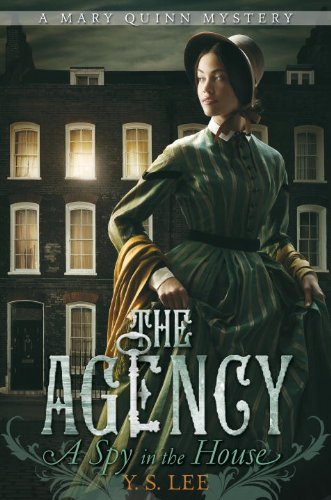
Review: A Spy in the House (The Agency #1), by Y. S. Lee
I have such a weird relationship with mystery novels. I keep being fascinated by them, and really wanting to read them, but every single time I grow impatient and slightly bored with them. I should learn. Nevertheless, I picked up A Spy in the House, the first book in The Agency series, by Y. S. Lee, because it seemed to be about a secret agency run by women, employing women spies, working in Victorian London. Come on, how was I suppose to resist that?
In 1850s London, Mary Quinn, born Lang, is rescued from the gallows and offered an education to become a proper lady at Miss Scrimshaw’s Academy for Girls. Years later, she is offered the singular job of becoming a spy. You see, the school is really a front for an all-female spy group called The Agency. Accepting her new job, Mary first's case is to pretend to be the lady companion of one young lady called Angelica Thorold, while gathering as many information as she can on her potentially thief and fraudulent father. I n the course of her investigation Mary discovers secrets about her past, meets a new ally, interesting and slightly arrogant James Easton, and learns that everybody has secrets, things might always be more dangerous than they seem, and to never ever take people at face value.
I liked this book. For a mystery. Like I said before, I'm not sure I'm the right person to comment objectively on any mystery book I read. I think I am too impatient to ever be able to enjoy them thoroughly (except for Sherlock Holmes stories. They are the exception to the rule). Once I'm half-way through a mystery novel, I usually just want to know how it ends, or who is the culprit, etc. and do not care as much anymore about the process to get there. That said, I actually really enjoyed several aspects of this book. Mary was an interesting character. It was great to see her start as a spy, to see her find her footing, making mistakes, and learning from them. As this is the first book in a series, it would be very interesting to see how her talents as a spy evolve. I'm no specialist of the Victorian period, and therefore could not point out historical inaccuracies even if I wanted to, but I could see, I could feel, that this book was well researched. Of course it helps that the author has a PhD in Victorian literature and culture. I loved all the little details here and there, a sentence, an anecdote, that contributed to make the world of the novel come to life. It always felt real, and not romanticized. That added greatly to my enjoyment of the book.
A second thing I loved was how it balanced fairly well the empowerment of women versus the gender restrictive era in which they lived. In fact, The Agency bases part of its success on the fact that, in those times, women were greatly underestimated. This constant tug and pull between expectations and what was actually possible, was really enjoyable and made me even ponder the feasibility of such an agency ever existing in the past. It was quite exciting at times.
The males interest, as there are bound to be one in YA novels, was actually interesting as well. He was given a voice, a personality and even goals and desires of his own that went beyond the heroine. James and Mary had fun, albeit at time a bit cheesy (but we like a bit of cheese, don't we?) arguments, and lively discussions. Their story was different in some aspects and it was quite refreshing. I love how it, and the book, ended. I also really enjoyed some of the other characters, especially Angelica, the spoiled, sometimes cruel, but ultimately unhappy, young lady, to whom Mary was hired to keep company.
Overall, I thought it was a great book. The mystery was well crafted, I think (even though I couldn't get really interested in it, but, like I said, that could be just me), the characters interesting and believable, the period details fascinating and the novel was well-paced. I would recommend this to anybody who loves historical or mystery novels (or both!). I, myself, will probably read the second book in the series, The Body at the Tower. I guess, I'll never learn.
In 1850s London, Mary Quinn, born Lang, is rescued from the gallows and offered an education to become a proper lady at Miss Scrimshaw’s Academy for Girls. Years later, she is offered the singular job of becoming a spy. You see, the school is really a front for an all-female spy group called The Agency. Accepting her new job, Mary first's case is to pretend to be the lady companion of one young lady called Angelica Thorold, while gathering as many information as she can on her potentially thief and fraudulent father. I n the course of her investigation Mary discovers secrets about her past, meets a new ally, interesting and slightly arrogant James Easton, and learns that everybody has secrets, things might always be more dangerous than they seem, and to never ever take people at face value.
I liked this book. For a mystery. Like I said before, I'm not sure I'm the right person to comment objectively on any mystery book I read. I think I am too impatient to ever be able to enjoy them thoroughly (except for Sherlock Holmes stories. They are the exception to the rule). Once I'm half-way through a mystery novel, I usually just want to know how it ends, or who is the culprit, etc. and do not care as much anymore about the process to get there. That said, I actually really enjoyed several aspects of this book. Mary was an interesting character. It was great to see her start as a spy, to see her find her footing, making mistakes, and learning from them. As this is the first book in a series, it would be very interesting to see how her talents as a spy evolve. I'm no specialist of the Victorian period, and therefore could not point out historical inaccuracies even if I wanted to, but I could see, I could feel, that this book was well researched. Of course it helps that the author has a PhD in Victorian literature and culture. I loved all the little details here and there, a sentence, an anecdote, that contributed to make the world of the novel come to life. It always felt real, and not romanticized. That added greatly to my enjoyment of the book.
A second thing I loved was how it balanced fairly well the empowerment of women versus the gender restrictive era in which they lived. In fact, The Agency bases part of its success on the fact that, in those times, women were greatly underestimated. This constant tug and pull between expectations and what was actually possible, was really enjoyable and made me even ponder the feasibility of such an agency ever existing in the past. It was quite exciting at times.
The males interest, as there are bound to be one in YA novels, was actually interesting as well. He was given a voice, a personality and even goals and desires of his own that went beyond the heroine. James and Mary had fun, albeit at time a bit cheesy (but we like a bit of cheese, don't we?) arguments, and lively discussions. Their story was different in some aspects and it was quite refreshing. I love how it, and the book, ended. I also really enjoyed some of the other characters, especially Angelica, the spoiled, sometimes cruel, but ultimately unhappy, young lady, to whom Mary was hired to keep company.
Overall, I thought it was a great book. The mystery was well crafted, I think (even though I couldn't get really interested in it, but, like I said, that could be just me), the characters interesting and believable, the period details fascinating and the novel was well-paced. I would recommend this to anybody who loves historical or mystery novels (or both!). I, myself, will probably read the second book in the series, The Body at the Tower. I guess, I'll never learn.
16.4.11
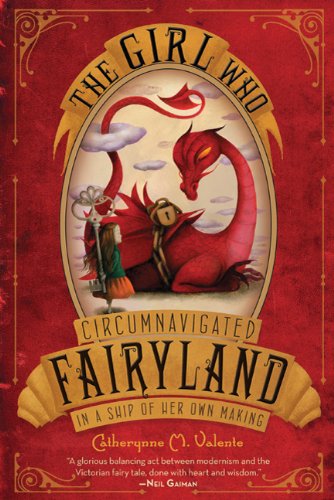
Review: The Girl Who Circumnavigated Fairyland in a Ship of Her Own Making, by Catherynne M. Valente
I'm going to be honest, I love Catherynne Valente's work. Love. This story was first published on her website, and I somehow missed it. When I finally found my way to it, the last part of the book had been taken down in anticipation for its print publication. There was no way I was starting this book without finishing it, so I put down the publication date in my calendar, and waited. And waited. And waited. Finally, by chance, luck, or my good star looking down on me, I was offered to review an advanced copy of the book by the publishers. I was so happy I could barely contain myself. And when I received it, I held it in my hands, preciously, almost scared to open the first page. But what else can one do with a book, but dive in, and see where it takes you? So I did. and, boy, what a trip it took me on. What an adventure!
Twelve-year old September is met one day at her window by a Green Wind (riding a panther). He offers to take her on an adventure into Fairyland, where wonders await her. September slowly finds that her help might be needed there. The Marquess, ruler of Fairyland, is fickle, unpredictable, and even cruel. September makes friends, including a wyvern whose father is a library and a strange boy named Saturday, and offers her help. She soon finds herself on a quest that takes her further than she ever thought she would ever go.
This book did not dissapoint my over-the-top anticipation and expectation in any way. It even surpassed them. I should have known. I should have known it would be more than what I could imagine. It is a testament to Ms. Valente's storytelling talent that she can do that. Not only is her prose absolutely gorgeous, it makes you want to write down or underline a quote every single page, but the way she weaves a story is remarkable.
This book is a treasure. Truly. I can barely find the words to describe how delighted it made me. How I enjoyed the twists and turns of the story, the adventure, the love, the friendship, and the courage. Oh the Bravery of this book, the Bravery of September. She starts as such an interesting, but well-known type of character, like Alice and her Wonderland. But soon, she morphs into her own character, puts her feet down, and become so tangible, she felt like a friend or a little sister. But it was more than that, I wanted to be September, or at the very least it made me wish I could have been like her when I was younger. But September is not the only one stealing my heart in this book, oh no, every character that she meets, all of her friends and ennemies, have something special and interesting. Catherynne M. Valente has this ability to take well-known creatures such as dragons, wyverns, witches and fairies and create them anew, so they become unique with their own mythology, their own world.
The story is told by a third-person omniscient narrator that oftens talks directly to the reader, and even points out details and insights into the process of storytelling itself. But instead of feeling condescending or taking you away from your immersion in the story, it feels familiar and comforting. Like having a story told by a particularly gifted person around a campfire at Summer camp. Or your mom weaving a story while you slowly fall asleep with your head on her stomach, staring at the changing shapes on your ceiling created by your nightlight.
I could go on and on about this book. How it's both for children and adults because it speaks to the same place in our hearts. Or how, even if you are not as enthusiastic about it as I am, it is just a lot of fun. It has funny moments, dark moments, quests, friendships, wonders and adventure. What more can you want?
The Girl Who Circumnavigated Fairyland in a Ship of Her Own Making comes out May 10th 2011. Take note, write it down. Buy yourself a copy.
(thank you to Macmillan Children's Publishing Group for the ARC copy)
Twelve-year old September is met one day at her window by a Green Wind (riding a panther). He offers to take her on an adventure into Fairyland, where wonders await her. September slowly finds that her help might be needed there. The Marquess, ruler of Fairyland, is fickle, unpredictable, and even cruel. September makes friends, including a wyvern whose father is a library and a strange boy named Saturday, and offers her help. She soon finds herself on a quest that takes her further than she ever thought she would ever go.
This book did not dissapoint my over-the-top anticipation and expectation in any way. It even surpassed them. I should have known. I should have known it would be more than what I could imagine. It is a testament to Ms. Valente's storytelling talent that she can do that. Not only is her prose absolutely gorgeous, it makes you want to write down or underline a quote every single page, but the way she weaves a story is remarkable.
This book is a treasure. Truly. I can barely find the words to describe how delighted it made me. How I enjoyed the twists and turns of the story, the adventure, the love, the friendship, and the courage. Oh the Bravery of this book, the Bravery of September. She starts as such an interesting, but well-known type of character, like Alice and her Wonderland. But soon, she morphs into her own character, puts her feet down, and become so tangible, she felt like a friend or a little sister. But it was more than that, I wanted to be September, or at the very least it made me wish I could have been like her when I was younger. But September is not the only one stealing my heart in this book, oh no, every character that she meets, all of her friends and ennemies, have something special and interesting. Catherynne M. Valente has this ability to take well-known creatures such as dragons, wyverns, witches and fairies and create them anew, so they become unique with their own mythology, their own world.
The story is told by a third-person omniscient narrator that oftens talks directly to the reader, and even points out details and insights into the process of storytelling itself. But instead of feeling condescending or taking you away from your immersion in the story, it feels familiar and comforting. Like having a story told by a particularly gifted person around a campfire at Summer camp. Or your mom weaving a story while you slowly fall asleep with your head on her stomach, staring at the changing shapes on your ceiling created by your nightlight.
I could go on and on about this book. How it's both for children and adults because it speaks to the same place in our hearts. Or how, even if you are not as enthusiastic about it as I am, it is just a lot of fun. It has funny moments, dark moments, quests, friendships, wonders and adventure. What more can you want?
The Girl Who Circumnavigated Fairyland in a Ship of Her Own Making comes out May 10th 2011. Take note, write it down. Buy yourself a copy.
(thank you to Macmillan Children's Publishing Group for the ARC copy)
6.4.11
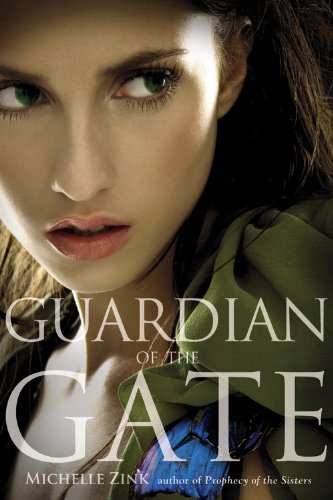
Review: Guardian of the Gate, by Michelle Zink
Guardian of the Gate is the second book in the Prophecy of the Sisters series, click here to read my review of the first book.
Lia and Sonia have been in London for nine months now. They are getting ready to travel to Altus, the mystical island where Lia's aunt will tell them where to find the Prophecy's missing pages. These pages are important to Lia, as they are suppose to tell her how to end the Prophecy and defeat her sister Alice. They are soon joined by Edmond and Luisa and leave on the perilous journey to Altus. They are joined and helped by Dimitri, a boy Lia finds herself attracted to. They are pursued by Hounds and face betrayal within their ranks. It is a long way to Altus and an even longer way to the missing pages, but Lia is determined to see her quest through and end the Prophecy once and for all.
The first book of this series felt a bit gothic and was definitely intriguing, I got sucked into the Prophecy and really wanted to know more about it. The second book was, in my opinion, disappointing. Most of the book follows Lia, her two friends (and Keys to the Prophecy) Sonia and Luisa, her faithful servant Edmond, and a new powerful ally, Dimitri, on their way to Altus. The second book is more of a quest/adventure story than a gothic mystery like the first one. Still, while a bit slow, the plot moves forward steadily and more details are slowly revealed, but very few, and maybe not enough, in the end. Most of all, we are introduced to a new character and love interest, Dimitri. Now, if you have read this blog for a while you know I am highly critical of love stories in YA fiction, but I am not immune to them. I like them when they are well written. This was not one of them. It was one of those almost-love-at-first-sight-I-trust-you-almost-immediately-I-don't-know-why-but-you-bring-me-such-comfort-and-I-feel-safe-with-you relationship. It had almost immediate making out sessions by campfire light, even though this is suppose to be the 19th century. Oh I'm sure people still made out in those times in secret even though it was considered improper. After all, all those stereotypes about quiet gardeners and sexy stable boys must have come from somewhere, but really? It was not written in a believable fashion. Not to me anyway. I was rolling my eyes so hard, I gave myself a headache. Not only that, but Dimitri? He was boring. Look, he was a nice guy, and I like nice guys. They are not present enough in YA fiction. But they are also hard to write. He had no personality. He was brave and strong and loved Lia unconditionally almost immediately. He was ready to die for her, right there and then. He was so much about her, he was the male equivalent of all those empty females characters you see in Hollywood movies that are there to help the hero on their way and offer them emotional support, but have no real life of their own.
That said the love story did not take over the whole plot, which is a good thing. Lia did keep her eyes on her goals, and never really forgot her purpose or quest. In my review of the first book, I presumed I would love Lia more in the sequels, and I was partly right. I did not dislike her, but I was indifferent to her for most of the book. It is only toward the end, when she is finally on her own, that she shows how strong she can be, and in those moments, I really liked her. My favourite characters were still Luisa and Sonia, although their relationship with Lia was obscured by Dimitri, and I would have much prefered if their bond had been more at the forefront of the story like it was in the first book.
This series is told from Lia's first point of view, but I think, for me, it would have been much better if it had been told from a third-person point of view. It could still focused on Lia, but it would have been nice to have some insight into other characters once in a while. For example, Alice is almost absent from this novel, because Lia and her are no longer together. But Alice is such an interesting character, and through the novel all the characters kept mentioning how powerful she was becoming, how evil and determined, but we never saw it truly. It would have been nice to have some chapters from her point of view. Since this is a story about a Prophecy between two sisters on opposing sides, it would have been nice to see both sides. It really made me realize how important the choice of point-of-view in a story can be.
In spite of its fault, though, I really really want to know how the whole story ends. The whole mythology atround the Prophecy is interesting and characters are changing and evolving and I think it will still be entertaining to read the last book, Circle of Fire, coming out this August.
Lia and Sonia have been in London for nine months now. They are getting ready to travel to Altus, the mystical island where Lia's aunt will tell them where to find the Prophecy's missing pages. These pages are important to Lia, as they are suppose to tell her how to end the Prophecy and defeat her sister Alice. They are soon joined by Edmond and Luisa and leave on the perilous journey to Altus. They are joined and helped by Dimitri, a boy Lia finds herself attracted to. They are pursued by Hounds and face betrayal within their ranks. It is a long way to Altus and an even longer way to the missing pages, but Lia is determined to see her quest through and end the Prophecy once and for all.
The first book of this series felt a bit gothic and was definitely intriguing, I got sucked into the Prophecy and really wanted to know more about it. The second book was, in my opinion, disappointing. Most of the book follows Lia, her two friends (and Keys to the Prophecy) Sonia and Luisa, her faithful servant Edmond, and a new powerful ally, Dimitri, on their way to Altus. The second book is more of a quest/adventure story than a gothic mystery like the first one. Still, while a bit slow, the plot moves forward steadily and more details are slowly revealed, but very few, and maybe not enough, in the end. Most of all, we are introduced to a new character and love interest, Dimitri. Now, if you have read this blog for a while you know I am highly critical of love stories in YA fiction, but I am not immune to them. I like them when they are well written. This was not one of them. It was one of those almost-love-at-first-sight-I-trust-you-almost-immediately-I-don't-know-why-but-you-bring-me-such-comfort-and-I-feel-safe-with-you relationship. It had almost immediate making out sessions by campfire light, even though this is suppose to be the 19th century. Oh I'm sure people still made out in those times in secret even though it was considered improper. After all, all those stereotypes about quiet gardeners and sexy stable boys must have come from somewhere, but really? It was not written in a believable fashion. Not to me anyway. I was rolling my eyes so hard, I gave myself a headache. Not only that, but Dimitri? He was boring. Look, he was a nice guy, and I like nice guys. They are not present enough in YA fiction. But they are also hard to write. He had no personality. He was brave and strong and loved Lia unconditionally almost immediately. He was ready to die for her, right there and then. He was so much about her, he was the male equivalent of all those empty females characters you see in Hollywood movies that are there to help the hero on their way and offer them emotional support, but have no real life of their own.
That said the love story did not take over the whole plot, which is a good thing. Lia did keep her eyes on her goals, and never really forgot her purpose or quest. In my review of the first book, I presumed I would love Lia more in the sequels, and I was partly right. I did not dislike her, but I was indifferent to her for most of the book. It is only toward the end, when she is finally on her own, that she shows how strong she can be, and in those moments, I really liked her. My favourite characters were still Luisa and Sonia, although their relationship with Lia was obscured by Dimitri, and I would have much prefered if their bond had been more at the forefront of the story like it was in the first book.
This series is told from Lia's first point of view, but I think, for me, it would have been much better if it had been told from a third-person point of view. It could still focused on Lia, but it would have been nice to have some insight into other characters once in a while. For example, Alice is almost absent from this novel, because Lia and her are no longer together. But Alice is such an interesting character, and through the novel all the characters kept mentioning how powerful she was becoming, how evil and determined, but we never saw it truly. It would have been nice to have some chapters from her point of view. Since this is a story about a Prophecy between two sisters on opposing sides, it would have been nice to see both sides. It really made me realize how important the choice of point-of-view in a story can be.
In spite of its fault, though, I really really want to know how the whole story ends. The whole mythology atround the Prophecy is interesting and characters are changing and evolving and I think it will still be entertaining to read the last book, Circle of Fire, coming out this August.
Labels:
Review,
YA,
YA Paranormal
25.3.11
Quick Review: Saving Francesca, by Malina Marchetta
The first book I read by Melina MArchetta was Jellicoe Road (click for review). I so loved it that I had to get my hands on her other books. Unfortunately, my local library had just one of them, Saving Francesca. Fortunately, it was so good I didn't mind not being able to read the other ones right away.
Francesca is starting year eleven in a new school that used to be boys only, without any of her old friends and nobody she knows well to support her. On top of that, her lively, energetic mother suddenly cannot get out of bed anymore, and spends her days in her room. Nobody tells Francesca why or what is happening and she feels her world, and family, slowly unravel around her. Used to be passive, and always prefering to keep out of things, Francesca finds that she will have to fight for what she loves, and that more people than she thinks will love her back, unconditionally.
I do not know how Melina Marchetta does it, but I found myself three-quarters in this novel, with no real idea how I got there, and what exactly had happened besides the daily routines of the characters, but knowing that things had changed, things had moved, and I could not stop reading without knowing how it ended. There is a point where I realized I loved those characters, even the small unimportant ones. It just creeped up on me and suddenly I was in love, which I think is a testament to the author's storytelling skills. This book also explores really well what it is like to be a child with a parent who suffers from depression. I know, I've been there. And while it is different for everybody, each family being unique in its own way, there is an understanding of the confusion and pain that comes with something like this, which made me connect (and cry) with the story. That said, it is so clearly written, that anybody would or could understand what Francesca is going through, or at least empathize. It's a book about friendship, love and family and the things, however small, that bind us together. I am really looking forward to any other book by this author.
Francesca is starting year eleven in a new school that used to be boys only, without any of her old friends and nobody she knows well to support her. On top of that, her lively, energetic mother suddenly cannot get out of bed anymore, and spends her days in her room. Nobody tells Francesca why or what is happening and she feels her world, and family, slowly unravel around her. Used to be passive, and always prefering to keep out of things, Francesca finds that she will have to fight for what she loves, and that more people than she thinks will love her back, unconditionally.
I do not know how Melina Marchetta does it, but I found myself three-quarters in this novel, with no real idea how I got there, and what exactly had happened besides the daily routines of the characters, but knowing that things had changed, things had moved, and I could not stop reading without knowing how it ended. There is a point where I realized I loved those characters, even the small unimportant ones. It just creeped up on me and suddenly I was in love, which I think is a testament to the author's storytelling skills. This book also explores really well what it is like to be a child with a parent who suffers from depression. I know, I've been there. And while it is different for everybody, each family being unique in its own way, there is an understanding of the confusion and pain that comes with something like this, which made me connect (and cry) with the story. That said, it is so clearly written, that anybody would or could understand what Francesca is going through, or at least empathize. It's a book about friendship, love and family and the things, however small, that bind us together. I am really looking forward to any other book by this author.
Labels:
Review,
YA,
YA Contemporary
23.3.11
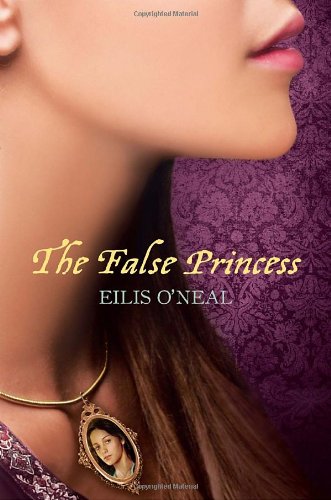
Review: The False Princess, by Eilis O'Neal
I came across this book while browsing possible debut novel for the Debut Author Challenge. I thought the story sounded interesting and it reminded me of a teenage version of some of Gail Carson Levine's books. And beside there is so much YA paranormal these days, that I will almost jumped on any YA Fantasy book I can get my hands on that sounds remotely decent. Fortunately, this book was more than decent, and I am quite happy I took the chance of buying it without knowing much abou it.
Nalia, crown princess of Thorvaldor, learns on her sixteenth birthday that she is really Sinda, a poor peasant girl who was raised as the princess due to a prophecy that said there was a great chance of an attack on the princess' life before she was sixteen. The King and the Queen, worried for their childs's life, agreed on a plan in which the real princess would be hidden for sixteen years, while another girl, born around the same time, would take her place. Now Sinda is sent to her aunt's house in the countryside, far from everything she has ever known. Unable to adapt to her new life (not for lack of trying) and with the discovery of magical talents that has laid latent inside of her for all these years, she makes her way back to the city in hope of becoming a wizard. To her dismay, she soon discover a plot to usurp the throne from the rightful princess. Sinda, with the help of her best friend Kiernan, who never deserted her, is now in a race against the clock to discover who the conspirators are, and stop them before it's too late.
I must say, I thoroughly liked this book. It was was really well paced, the plot constantly moving forward with hardly any slower parts. The plot istself was intricate, but still simple to follow. The characters were, in general, endearing and fun. Sinda was a good protagonist, I enjoyed seeing her grow through the novel. She genuinely tries to adapt to her poor life once outside the castle. Sinda wants more than anything to figure out what and who she is, she wants to prove to herself and the people around her that she can be somebody even if she isn't a princess anymore. After all, how does one cope with being a princess and the future Queen, one moment, and a nobody the next? Sinda is constantly plagued by self-doubt, constantly questioning herself and how people see her, which at times can become a bit annoying. But the beauty of her is that she always rise up to the occasion in the end. I found myself liking the other characters as well, especially Kiernan, the real princess and Philanthra, the wizard who takes her on as her scribe. The False Princess is the story of a girl and her growth, of love and loyalty. Thre wasn't any "wow" moment for me, but it was a solid first novel, a quick read, and quite enjoyable at that. I look forward to more from this author.
For fans of Gail Carson Levine and Robin McKinley.
Nalia, crown princess of Thorvaldor, learns on her sixteenth birthday that she is really Sinda, a poor peasant girl who was raised as the princess due to a prophecy that said there was a great chance of an attack on the princess' life before she was sixteen. The King and the Queen, worried for their childs's life, agreed on a plan in which the real princess would be hidden for sixteen years, while another girl, born around the same time, would take her place. Now Sinda is sent to her aunt's house in the countryside, far from everything she has ever known. Unable to adapt to her new life (not for lack of trying) and with the discovery of magical talents that has laid latent inside of her for all these years, she makes her way back to the city in hope of becoming a wizard. To her dismay, she soon discover a plot to usurp the throne from the rightful princess. Sinda, with the help of her best friend Kiernan, who never deserted her, is now in a race against the clock to discover who the conspirators are, and stop them before it's too late.
I must say, I thoroughly liked this book. It was was really well paced, the plot constantly moving forward with hardly any slower parts. The plot istself was intricate, but still simple to follow. The characters were, in general, endearing and fun. Sinda was a good protagonist, I enjoyed seeing her grow through the novel. She genuinely tries to adapt to her poor life once outside the castle. Sinda wants more than anything to figure out what and who she is, she wants to prove to herself and the people around her that she can be somebody even if she isn't a princess anymore. After all, how does one cope with being a princess and the future Queen, one moment, and a nobody the next? Sinda is constantly plagued by self-doubt, constantly questioning herself and how people see her, which at times can become a bit annoying. But the beauty of her is that she always rise up to the occasion in the end. I found myself liking the other characters as well, especially Kiernan, the real princess and Philanthra, the wizard who takes her on as her scribe. The False Princess is the story of a girl and her growth, of love and loyalty. Thre wasn't any "wow" moment for me, but it was a solid first novel, a quick read, and quite enjoyable at that. I look forward to more from this author.
For fans of Gail Carson Levine and Robin McKinley.
Labels:
Review,
YA,
YA Fantasy
21.3.11
Monday 10: Of Aussie Young Adult Books & Authors
Monday 10 is a weekly post where I share a list of 10 bookish items based on a theme, subject, idea, fancy, etc.
Every reader and blogger is also invited to participate and make their own list. It doesn't have to have the same theme, it just needs to pertain to books!
If you do make your own list and post it to your blog, share the link in the comments. Or if you prefer write your own list in the comments!
Note: I put 3 asterisks beside the titles I have read and recommnend. Ihave not read all of the books I put in these lists, so be sure to check them all out!
Almost all of the contemporary fiction I've been reading in the past few months has been written by Autralian authors, so I thought I would make this Monday's list about them and their books. The title links lead to their respective goodreads page, the author links lead to their personal website.
* 10 YA books by 10 Australian authors *
Every reader and blogger is also invited to participate and make their own list. It doesn't have to have the same theme, it just needs to pertain to books!
If you do make your own list and post it to your blog, share the link in the comments. Or if you prefer write your own list in the comments!
Note: I put 3 asterisks beside the titles I have read and recommnend. Ihave not read all of the books I put in these lists, so be sure to check them all out!
Almost all of the contemporary fiction I've been reading in the past few months has been written by Autralian authors, so I thought I would make this Monday's list about them and their books. The title links lead to their respective goodreads page, the author links lead to their personal website.
* 10 YA books by 10 Australian authors *
- Jellicoe Road, by Melina Marchetta ***
- The Book Thief, by Markus Zusak ***
- Tomorrow, When the War Began, by John Marsden
- The Spell Book of Listen Taylor, by Jaclyn Moriarty ***
- Sabriel, by Garth Nix
- Magic or Madness, by Justine Larbalestier
- Tender Morsels, by Margo Lanagan
- Thursday's Child, by Sonya Hartnett
- A Little Wanting Song, by Cath Crowley
- Obernewtyn, by Isabelle Carmody
16.3.11
Review: The Betrayal of Maggie Blair, by Elizabeth Laird
This is a review of a Digital ARC, provided by Houghton Mifflin Harcourt through netgalley.com
I generally do not read a lot of historical novels unless there are some element of fantasy as well, but I do enjoy stories taking place during certain eras and/or events. I am also a bit fascinated by the witch hunts and trials that happened in Europe and New England during the 17th century and this is precisely why I requested this book and was very interested in reading it.
The novel tells the story of sixteen-year old Maggie Blair who lives with her very angry and spiteful grandmother on the island of Bute in seventeenth-century Scotland. The first third of the novel deals with her life on the island, the tensions between the inhabitants and her grandmother and the subsequent accusations of witchcraft. Maggie finds herslef accused and sentenced to death and is forced to flea the island. She takes refuge in her uncle's house on the mainland. There she thinks she can finally lead a peaceful life, but trouble seems to follow her. Her uncle Hugh is a Covenanter, a group of Scottish men and women who want a church free of the King's rule. By refusing to akcnowledge the King as the head of the Church and to attend any services lead by any royal-appointed bishop, they were soon fined, persecuted and even executed. Maggie finds herself more and more involved, never sure where she stands in her beliefs, but still willing to risk her own life to save her uncle and his family.
The Betrayal of Maggie Blair is, in my opinion, a fascinating YA historical novel. This was partly due, I must admit, to my total ignorance of the history of the Covenanters (presbyterians) in Scotland, and I was so happy to learn more about the subject. I thought the book was a bit too long, though. It's hard to say why as I look back on it, because the story always moved forward, there rarely were any idle moments or unnecessary long descriptions. It did cover a lot of time and events, from Maggie's life on the island, to her life with her uncle, to her quest to help him, and back. But I must say that I was immerse in it nonetheless, I read it relatively fast, and I absolutely needed to know how it would finish. There is no love story in this novel (what a change!) and is purely the story of a girl's journey and of a specific period in Scotlnad's history.
There was a disconnect between the first and second part of the book. While both dealt with religious persecutions of two different kinds, one born of hatred, ignorance and fear, the other out of power and control, plot-wise they felt almost unrelated. Maggie could have had any other reason to see her uncle without having to flea due to false accusations of witchcraft. The only connection between the two parts was the character of Maggie herself and her emotional and psychological growth spurred by all of these events. As a protagonist Maggie is well developed, starting as an uneducated, fearful and slowly developing into a smart and braver young women. Her growing process was slow and sometimes frustrating, but it felt true at the same time. I sometimes wanted her to be more proactive, more outspoken, just more, but then I realized I was comparing her to all those fantasy heroines I like, not to what a seventeenth-century Scottish girl would be. Once I realized my mistake, I was able to appreciate her more. In the end, I liked this book and it did make me want to maybe pick up more historical novels in the future.
This book will be published April 18th 2011. See the Goodreads page, to add it to your to-read list!
I generally do not read a lot of historical novels unless there are some element of fantasy as well, but I do enjoy stories taking place during certain eras and/or events. I am also a bit fascinated by the witch hunts and trials that happened in Europe and New England during the 17th century and this is precisely why I requested this book and was very interested in reading it.
The novel tells the story of sixteen-year old Maggie Blair who lives with her very angry and spiteful grandmother on the island of Bute in seventeenth-century Scotland. The first third of the novel deals with her life on the island, the tensions between the inhabitants and her grandmother and the subsequent accusations of witchcraft. Maggie finds herslef accused and sentenced to death and is forced to flea the island. She takes refuge in her uncle's house on the mainland. There she thinks she can finally lead a peaceful life, but trouble seems to follow her. Her uncle Hugh is a Covenanter, a group of Scottish men and women who want a church free of the King's rule. By refusing to akcnowledge the King as the head of the Church and to attend any services lead by any royal-appointed bishop, they were soon fined, persecuted and even executed. Maggie finds herself more and more involved, never sure where she stands in her beliefs, but still willing to risk her own life to save her uncle and his family.
The Betrayal of Maggie Blair is, in my opinion, a fascinating YA historical novel. This was partly due, I must admit, to my total ignorance of the history of the Covenanters (presbyterians) in Scotland, and I was so happy to learn more about the subject. I thought the book was a bit too long, though. It's hard to say why as I look back on it, because the story always moved forward, there rarely were any idle moments or unnecessary long descriptions. It did cover a lot of time and events, from Maggie's life on the island, to her life with her uncle, to her quest to help him, and back. But I must say that I was immerse in it nonetheless, I read it relatively fast, and I absolutely needed to know how it would finish. There is no love story in this novel (what a change!) and is purely the story of a girl's journey and of a specific period in Scotlnad's history.
There was a disconnect between the first and second part of the book. While both dealt with religious persecutions of two different kinds, one born of hatred, ignorance and fear, the other out of power and control, plot-wise they felt almost unrelated. Maggie could have had any other reason to see her uncle without having to flea due to false accusations of witchcraft. The only connection between the two parts was the character of Maggie herself and her emotional and psychological growth spurred by all of these events. As a protagonist Maggie is well developed, starting as an uneducated, fearful and slowly developing into a smart and braver young women. Her growing process was slow and sometimes frustrating, but it felt true at the same time. I sometimes wanted her to be more proactive, more outspoken, just more, but then I realized I was comparing her to all those fantasy heroines I like, not to what a seventeenth-century Scottish girl would be. Once I realized my mistake, I was able to appreciate her more. In the end, I liked this book and it did make me want to maybe pick up more historical novels in the future.
This book will be published April 18th 2011. See the Goodreads page, to add it to your to-read list!
Labels:
Review,
YA,
YA Historical
12.3.11
Quick Review: The Year of Secret Assignments, by Jaclyn Moriarty
This is one of those rare YA contemporary that I read (I'm slowly reading more of them), and it happens to be written yet again by an Australian author (the preicous book was Jellicoe Road, by Melina Marchetta). This is the second book I read by Jaclyn Moriarty after The Spell Book of Listen Taylor, which I thouroughly enjoyed and recommned. Since I had liked the first book, I was prompted to borrow another book of hers at the library and am very glad I did.
The entirety of The Year of Secret Assignments is told through letters, emails, notes, and journal entries that the characters exchange between each other. The book follows three best friends, Cass, Em and Lyd, as they start corresponding with three boys as part of an English exchange program between their two high schools who are too often at odds with each other. Ensues a series of hilarious and touching situations as the characters learn about each other and help each other in their hour of need.
I really enjoyed this book. It was quick and funny. I was iniatially scared that it would be too much for teenagers and that I would not be able to relate. So often YA authors try to sound like teenagers, but end up sounding silly and like adults who try to sound like teenagers, but I found that this was not the case with Jaclyn Moriarty. She gave all of her characters distinctive voices, never entangling herself in too much slang and gimmicks to try and make them sound like teenagers, and yet they felt like teenagers. This made them infinitely more endearing to me and proves that the author has very good characterization skills. And while there was romance and heartbreak, the book was first and foremost about friendship. About three girls who, even though different, love each other more than anything and would do anything to help and protect one another. And this is what made me love this book in the end. Too often nowadays YA fiction is solely about romance, espcially when novel have female protagonists, as if that's all young women really want, and forget about the true love that lies in friendship. I find friendship stories more interesting and lasting than most romantic stories and I am glad that the author showed that in her novel. I'll be sure to pick up her other books on my next trip to the library.
The entirety of The Year of Secret Assignments is told through letters, emails, notes, and journal entries that the characters exchange between each other. The book follows three best friends, Cass, Em and Lyd, as they start corresponding with three boys as part of an English exchange program between their two high schools who are too often at odds with each other. Ensues a series of hilarious and touching situations as the characters learn about each other and help each other in their hour of need.
I really enjoyed this book. It was quick and funny. I was iniatially scared that it would be too much for teenagers and that I would not be able to relate. So often YA authors try to sound like teenagers, but end up sounding silly and like adults who try to sound like teenagers, but I found that this was not the case with Jaclyn Moriarty. She gave all of her characters distinctive voices, never entangling herself in too much slang and gimmicks to try and make them sound like teenagers, and yet they felt like teenagers. This made them infinitely more endearing to me and proves that the author has very good characterization skills. And while there was romance and heartbreak, the book was first and foremost about friendship. About three girls who, even though different, love each other more than anything and would do anything to help and protect one another. And this is what made me love this book in the end. Too often nowadays YA fiction is solely about romance, espcially when novel have female protagonists, as if that's all young women really want, and forget about the true love that lies in friendship. I find friendship stories more interesting and lasting than most romantic stories and I am glad that the author showed that in her novel. I'll be sure to pick up her other books on my next trip to the library.
Labels:
Review,
YA,
YA Contemporary
21.2.11
Review: Bithmarked, by Caragh M. O'Brien
I quite enjoy the afflux of distopian novels in young adult literature that has been happening these past few years and I've been trying to read as many as I can, or at least read about such novels, as there is something quite fascinating in the high interest and growing following these books garner within the teen community (as well as others, like me, who enjoy young adult literature). The first book I read in 2011 was such book: Birthmarked, by Caragh M. O'Brien.
Far in the furture, after extreme climate changes, society is now divided between those who live inside the wall, a rich, abundant and luxuriant city, and those who live outside the wall, like our heroine Gaia Stone, poor, often malnourish but hard working people. Gaia is a sixteen years old midwife, who has learned everything she knows from her mother. Every month she needs to "advanced" a quota of babies, to be taken into the Enclave (inside the wall) to be raised there by new parents. Things go well for Gaia, until one night where she witnesses the agonizing pain of a mother who refuses to let go of her baby, and where her parents are taken prisoners into the Enclave. Now alone, Gaia is determined to find her parents, and in the process is herself arrested and imprisoned. Gaia is then faced with difficult moral choices, and the even more difficult task of unraveling the layers of secrets of this cruel, well-organized society she inhabits.
The world of Bithmarked, with, at its core, problems and issues of fertility and genetics can easily remind the reader of such book as The Handmaid's Tale, by Margaret Atwood or Children of Men, by P. D. James, but it also has its own mythology, its own flavor that makes it different. Gaia, who was badly scarred on one side of her face in her childhood, is a strong-willed and stubborn heroine. She does not hesitate to take risks for what she thinks is the right things to do, no matter the consequences. She has complete faith in her ideals. Her scars prevents her from ever being "advanced", from being able to one day live in the Enclave, so she is totally devoted to her life and her people outside the wall, but even more to her work as a midwife. These scars also afford her a certain vulnerability, of feeling ugly or undesirable that teenage girls, especially, are able to identify with. Nevertheless, I feel it was never taken too far as to be self-pity or over dramatized. Gaia has also learned to live with these scars.
There is a love story in this book, as it seems is de rigueur for any YA book these days, and I must admit I am quite picky about those. I am very difficult to please in this matter, and more often than not, romantic relationships in YA novels make me want to roll my eyes, if not abandon a book althogether. I was then, pleasantly surprised to not have been bothered by the romance in Bithmarked so much. I even quite enjoyed it in parts. While I felt that the male character was interested in Gaia a bit too fast, and maybe a bit too conveniently as it was quite pivotal for the story later on, and that the romance teetered on overtaking the third part of the novel, it never quite did so. More importantly, it never took over Gaia. Too often in YA novels, our strong-willed, determined and independent heroines get taken over by the romance (or by quite creepy male love interests) and loose all of their interesting flavor. Not so in this book. I always felt that Gaia knew what she had to do and kept her eyes and mind focused on her goals even as her heart might have wanted to lead her astray. Her love interest also had a position of power over her, but she never quite let him overpower her as well, which made me want to cheer her on. So while some things bothered me about this aspect of the novel, I was quite pleased in how Caragh M. O'Brien handled this stapled of YA plot and storytelling.
Bithmarked was a quick read, often exciting and riveting to me, a great way to start the year. I am looking forward to its sequel Prized due out in November of this year.
Far in the furture, after extreme climate changes, society is now divided between those who live inside the wall, a rich, abundant and luxuriant city, and those who live outside the wall, like our heroine Gaia Stone, poor, often malnourish but hard working people. Gaia is a sixteen years old midwife, who has learned everything she knows from her mother. Every month she needs to "advanced" a quota of babies, to be taken into the Enclave (inside the wall) to be raised there by new parents. Things go well for Gaia, until one night where she witnesses the agonizing pain of a mother who refuses to let go of her baby, and where her parents are taken prisoners into the Enclave. Now alone, Gaia is determined to find her parents, and in the process is herself arrested and imprisoned. Gaia is then faced with difficult moral choices, and the even more difficult task of unraveling the layers of secrets of this cruel, well-organized society she inhabits.
The world of Bithmarked, with, at its core, problems and issues of fertility and genetics can easily remind the reader of such book as The Handmaid's Tale, by Margaret Atwood or Children of Men, by P. D. James, but it also has its own mythology, its own flavor that makes it different. Gaia, who was badly scarred on one side of her face in her childhood, is a strong-willed and stubborn heroine. She does not hesitate to take risks for what she thinks is the right things to do, no matter the consequences. She has complete faith in her ideals. Her scars prevents her from ever being "advanced", from being able to one day live in the Enclave, so she is totally devoted to her life and her people outside the wall, but even more to her work as a midwife. These scars also afford her a certain vulnerability, of feeling ugly or undesirable that teenage girls, especially, are able to identify with. Nevertheless, I feel it was never taken too far as to be self-pity or over dramatized. Gaia has also learned to live with these scars.
There is a love story in this book, as it seems is de rigueur for any YA book these days, and I must admit I am quite picky about those. I am very difficult to please in this matter, and more often than not, romantic relationships in YA novels make me want to roll my eyes, if not abandon a book althogether. I was then, pleasantly surprised to not have been bothered by the romance in Bithmarked so much. I even quite enjoyed it in parts. While I felt that the male character was interested in Gaia a bit too fast, and maybe a bit too conveniently as it was quite pivotal for the story later on, and that the romance teetered on overtaking the third part of the novel, it never quite did so. More importantly, it never took over Gaia. Too often in YA novels, our strong-willed, determined and independent heroines get taken over by the romance (or by quite creepy male love interests) and loose all of their interesting flavor. Not so in this book. I always felt that Gaia knew what she had to do and kept her eyes and mind focused on her goals even as her heart might have wanted to lead her astray. Her love interest also had a position of power over her, but she never quite let him overpower her as well, which made me want to cheer her on. So while some things bothered me about this aspect of the novel, I was quite pleased in how Caragh M. O'Brien handled this stapled of YA plot and storytelling.
Bithmarked was a quick read, often exciting and riveting to me, a great way to start the year. I am looking forward to its sequel Prized due out in November of this year.
Labels:
Review,
YA,
YA Dystopian
18.2.11
Quick Review: Sirena, by Donna Jo Napoli
Another book inspired by Greek mythology. I just can't resist! This is the second book I read by Donna Jo Napoli, and I thoroughly enjoyed it.
In Napoli's novel, mermaids are not cruel creatures who take joy in leading sailors to their death with their enchanting and mesmerizing voices, but desperate creatures in need of being loved by a human. Sirena, the protagonist, and her sisters sing in hope that one day a man will love them and therefore make them as immortal as their cousins the nymphs. But when tragedy strikes, Sirena leaves her sister and decides to live on her own around the island of Lemnos, where she meets Philolectes, love and possibly happiness. That is until the prospect of the Trojan war falls upon them and threatens to ruined everything.
Sirena is a sweet love story. Written in a sparse and simple, often beautiful, prose it wraps several myths together to create a story of love and loss, but also of self-integrety. Sirena, contrary to Andersen's Little Mermaid, or Disney's Ariel, does not desire to be what she is not. She does not want to change, does not want to give parts of herself away in the hope that a human will love her. She wants to be loved exactly for who she is, and even when she has doubts and fears she always try to stay true to herself and what she believes in. She does not desire to be human, only to be loved by one. This aspect, more than anything else in the story, made me appreciate, and enjoy, Napoli's novel.
In Napoli's novel, mermaids are not cruel creatures who take joy in leading sailors to their death with their enchanting and mesmerizing voices, but desperate creatures in need of being loved by a human. Sirena, the protagonist, and her sisters sing in hope that one day a man will love them and therefore make them as immortal as their cousins the nymphs. But when tragedy strikes, Sirena leaves her sister and decides to live on her own around the island of Lemnos, where she meets Philolectes, love and possibly happiness. That is until the prospect of the Trojan war falls upon them and threatens to ruined everything.
Sirena is a sweet love story. Written in a sparse and simple, often beautiful, prose it wraps several myths together to create a story of love and loss, but also of self-integrety. Sirena, contrary to Andersen's Little Mermaid, or Disney's Ariel, does not desire to be what she is not. She does not want to change, does not want to give parts of herself away in the hope that a human will love her. She wants to be loved exactly for who she is, and even when she has doubts and fears she always try to stay true to herself and what she believes in. She does not desire to be human, only to be loved by one. This aspect, more than anything else in the story, made me appreciate, and enjoy, Napoli's novel.
Labels:
Greek mythology,
Review,
YA
16.2.11
Review: The Iron Witch, by Kate Mahoney
When I first read the summary for The Iron Witch, I thought it sounded interesting and was intrigued by its promise of a mix between dark woodland fairies and alchemy. Then I read that the author actually got inspired by an article written by author Midori Snyder at the Endicott's Journal of Mythic Art about the fairytale "The Armless Maiden" and its different narratives called "The Armless Maiden and the Hero's Journey". That really got me excited. Anyone who knows, or refers to, the Endicott's Journal of Mythic Art deserves extra points for awesomeness in my book. Unfortunately, I must say, the awesomeness stopped there.
At age seven, Donna Underwood went through a nightmarish attack from the dark elves that killed her father and left her mother mad. It also left her almost fatally injured. Her survival was only due to the alchemical arts possessed by The Order of the Dragon's members to whom her parents belonged, which gave her iron and silver tattoos on her hands and arms. Now living with her aunt and ostracized from school the only thing helping Donna get through her days is her best friend Navin. But the dark elves are coming back into the city and are looking for something that she might possess ,and when they kidnap Navin, Donna will risk everything to get him back.
I am going to be honest here and say that I generally do not quite like YA paranormal books, with some exceptions, as I find that they often lack characterization, engaging writing (to me), and are too cliché when it comes to dealing with love stories and love triangles. I was hoping for this book to be different, but it wasn't. Not enough for me anyway.
Let me first start with what I like. I was genuinely intrigued by the world in The Iron Witch. I thought that the darker elves and the complex and mysterious (maybe even too mysterious as so many things are left open, probably to be revealed in the sequels) Order of the Dragon and its alchemical secrets, were a brilliant idea. That was for me the only thing that kept me reading.
The character of Donna had so much promise. She was strong-willed and loyal, and generally bright, but somehow fell flat. There were glimpses of her independent nature, especially in one of her journal entries, scattered through the book, where she rants about the patriarchal nature of The Order, and talks about wanting to study English and loving Daphne Du Maurier. I so wanted to know that girl, but instead I got a strong-willed girl who could never avoid blushing when her love interest brushed her waist with his arm, or was close to her in any way. Sure she felt silly, but seriously, nobody would blush and be embarrassed by these things when they are busy trying not to get killed. Speaking of love interests, the author gave us Xan. He is a nice older boy, who has secrets of his own (of course) but seems to care for Donna and at least doesn't feel the need to assert his masculinity over her. Unfortunately, he felt quite bland to me. While I am grateful that he is not one of those tortured, mysterious, dark but sensitive boys you sometimes (too often) see in those novels, he definitely lacked personality. But of course he is still gorgeous, with bright green eyes and nice abs. Donna and he liked each other way too fast, way too early in the book and I couldn't believe in them. At all. I caught myself rolling my eyes too often to ignore that fact. Navin was probably one of the most interesting characters in the book. While still possessing some sidekick clichéd characteristics, he at least was funny, loyal and more engaging than Xan and Donna. And bonus points for being a character of color. The three together are definitely reminiscent of the main characters in the John Hughes' movie Pretty in Pink. There could be a love triangle in the sequels. If that's the case, I hope Donna ends up with her best friend, even if he's not squared-jawed gorgeous.
There were other things that annoyed me like Donna taking three years to tell her secrets to her best friend, supposedly to protect him, then taking too many pages to tell him everything, and spilling the beans to Xan after only knowing him for two days. I couldn't wrap my head around it.
The plot was fast-paced and the book easy to read, but it was not redeemable for me. Donna's voice was not new or engaging, and the lack of characterization overshadowed the most interesting parts of the book that could have held my attention, and the love story took over any world-building elements that could have made me love this book. For me anyway. If on the other hand you are a fan of these books in general, I believe you will like this one, as I think the premise is at least a bit new.
At age seven, Donna Underwood went through a nightmarish attack from the dark elves that killed her father and left her mother mad. It also left her almost fatally injured. Her survival was only due to the alchemical arts possessed by The Order of the Dragon's members to whom her parents belonged, which gave her iron and silver tattoos on her hands and arms. Now living with her aunt and ostracized from school the only thing helping Donna get through her days is her best friend Navin. But the dark elves are coming back into the city and are looking for something that she might possess ,and when they kidnap Navin, Donna will risk everything to get him back.
I am going to be honest here and say that I generally do not quite like YA paranormal books, with some exceptions, as I find that they often lack characterization, engaging writing (to me), and are too cliché when it comes to dealing with love stories and love triangles. I was hoping for this book to be different, but it wasn't. Not enough for me anyway.
Let me first start with what I like. I was genuinely intrigued by the world in The Iron Witch. I thought that the darker elves and the complex and mysterious (maybe even too mysterious as so many things are left open, probably to be revealed in the sequels) Order of the Dragon and its alchemical secrets, were a brilliant idea. That was for me the only thing that kept me reading.
The character of Donna had so much promise. She was strong-willed and loyal, and generally bright, but somehow fell flat. There were glimpses of her independent nature, especially in one of her journal entries, scattered through the book, where she rants about the patriarchal nature of The Order, and talks about wanting to study English and loving Daphne Du Maurier. I so wanted to know that girl, but instead I got a strong-willed girl who could never avoid blushing when her love interest brushed her waist with his arm, or was close to her in any way. Sure she felt silly, but seriously, nobody would blush and be embarrassed by these things when they are busy trying not to get killed. Speaking of love interests, the author gave us Xan. He is a nice older boy, who has secrets of his own (of course) but seems to care for Donna and at least doesn't feel the need to assert his masculinity over her. Unfortunately, he felt quite bland to me. While I am grateful that he is not one of those tortured, mysterious, dark but sensitive boys you sometimes (too often) see in those novels, he definitely lacked personality. But of course he is still gorgeous, with bright green eyes and nice abs. Donna and he liked each other way too fast, way too early in the book and I couldn't believe in them. At all. I caught myself rolling my eyes too often to ignore that fact. Navin was probably one of the most interesting characters in the book. While still possessing some sidekick clichéd characteristics, he at least was funny, loyal and more engaging than Xan and Donna. And bonus points for being a character of color. The three together are definitely reminiscent of the main characters in the John Hughes' movie Pretty in Pink. There could be a love triangle in the sequels. If that's the case, I hope Donna ends up with her best friend, even if he's not squared-jawed gorgeous.
There were other things that annoyed me like Donna taking three years to tell her secrets to her best friend, supposedly to protect him, then taking too many pages to tell him everything, and spilling the beans to Xan after only knowing him for two days. I couldn't wrap my head around it.
The plot was fast-paced and the book easy to read, but it was not redeemable for me. Donna's voice was not new or engaging, and the lack of characterization overshadowed the most interesting parts of the book that could have held my attention, and the love story took over any world-building elements that could have made me love this book. For me anyway. If on the other hand you are a fan of these books in general, I believe you will like this one, as I think the premise is at least a bit new.
Labels:
Review,
YA,
YA Paranormal
10.2.11
Review: Prophecy of the Sisters, by Michelle Zink
I was a bit reluctant to start this book as I was afraid it would be another YA paranormal book full of swooning heroines and love triangles (not my cup of tea), but it ended up not being exactly that.
Prophecy of the Sisters is the first book in a trilogy of the same name (the second one, Guardian of the Gate is already out and the third one, Circle of Fire, is coming out this August). While it definitely had the making of a paranormal story, it is more a Gothic tale of Good versus Evil. Lia and Alice are twin sisters who are part of a prophecy as old as time. One is The Guardian, bound to keep the Lost Souls from crossing through our realm. One is The Gate, the one who will open the way for the Lost Souls, the demons, and eventually Samael, The Beast, who will bring forth the Apocalypse in its most Biblical grandeur. The two sisters will have to fight each other to finally end the prophecy once and for all, for Good or Evil. For that they need the Keys, and time is running short.
I must say the book was rather slow, not really boring, but definitely not one that can stand on its own without its sequels. It clearly establishes everything, which is fascinating. There were lots of details and lots of layers to the prophecy whom the narrator, Lia, had to uncover. And we, as readers, were as ignorant as her. Her slow process was realistic, but could also drag a little, nevertheless I was fascinated. What can I say, I am a sucker for dark mythology and end-of-the-world prophecies. I found myself annoyed at times, mostly when the characters were trying to figure out the nature and place of the mystical Keys. It was obvious to me where and what they were and I grew a bit impatient with them, though it wasn't the characters' fault, it was a knowledge only acquired through reading too many fantasy books. Like the knowledge my mom has after reading and re-reading all of Agatha Christie's books and knowing who the murderer is before the end. If I were to read one (and when I do read one) I am lost until the end when everything is revealed. It would have been quite unrealistic for the characters to jump to the same conclusion as me so fast, but still I waited with impatience for them to realize what seemed to me to be obvious.
Lia was a good character, although a bit soft and weak willed at first, but she slowly grew into her power which made her more interesting. I presume I will like her much more in the sequels. My favorite characters were her friends Luisa and Sonia, who were much more vivacious and energetic. Oh, and to be spared a mushy love story or love triangle! Bliss! Although I am sure one or the other or both will crop up in the sequels as they always do in YA novel with female protagonists, it was a breath of fresh air to not have it thrown at me from the start.
Overall, I thought it was a great start, albeit a bit slow and dragging in places, but I expect that this is the kind of trilogy where things and events build slowly upon each other until the inevitable explosive finale. Although it may seem boring for some, I was still fascinated by the world of the Prophecy and will surely read the sequels.
Prophecy of the Sisters is the first book in a trilogy of the same name (the second one, Guardian of the Gate is already out and the third one, Circle of Fire, is coming out this August). While it definitely had the making of a paranormal story, it is more a Gothic tale of Good versus Evil. Lia and Alice are twin sisters who are part of a prophecy as old as time. One is The Guardian, bound to keep the Lost Souls from crossing through our realm. One is The Gate, the one who will open the way for the Lost Souls, the demons, and eventually Samael, The Beast, who will bring forth the Apocalypse in its most Biblical grandeur. The two sisters will have to fight each other to finally end the prophecy once and for all, for Good or Evil. For that they need the Keys, and time is running short.
I must say the book was rather slow, not really boring, but definitely not one that can stand on its own without its sequels. It clearly establishes everything, which is fascinating. There were lots of details and lots of layers to the prophecy whom the narrator, Lia, had to uncover. And we, as readers, were as ignorant as her. Her slow process was realistic, but could also drag a little, nevertheless I was fascinated. What can I say, I am a sucker for dark mythology and end-of-the-world prophecies. I found myself annoyed at times, mostly when the characters were trying to figure out the nature and place of the mystical Keys. It was obvious to me where and what they were and I grew a bit impatient with them, though it wasn't the characters' fault, it was a knowledge only acquired through reading too many fantasy books. Like the knowledge my mom has after reading and re-reading all of Agatha Christie's books and knowing who the murderer is before the end. If I were to read one (and when I do read one) I am lost until the end when everything is revealed. It would have been quite unrealistic for the characters to jump to the same conclusion as me so fast, but still I waited with impatience for them to realize what seemed to me to be obvious.
Lia was a good character, although a bit soft and weak willed at first, but she slowly grew into her power which made her more interesting. I presume I will like her much more in the sequels. My favorite characters were her friends Luisa and Sonia, who were much more vivacious and energetic. Oh, and to be spared a mushy love story or love triangle! Bliss! Although I am sure one or the other or both will crop up in the sequels as they always do in YA novel with female protagonists, it was a breath of fresh air to not have it thrown at me from the start.
Overall, I thought it was a great start, albeit a bit slow and dragging in places, but I expect that this is the kind of trilogy where things and events build slowly upon each other until the inevitable explosive finale. Although it may seem boring for some, I was still fascinated by the world of the Prophecy and will surely read the sequels.
Labels:
Review,
YA,
YA Paranormal
8.2.11
Review: Jellicoe Road, by Melina Marchetta
I do not read a lot of YA contemporary. I’m not sure exactly why. I think it has to do with the fact that I just prefers fantasy books, or at least a little bit of magical in my stories. And I must admit that I probably have preconceived ideas about the genre (or maybe I was just unlucky), but it just always seemed to me that these books either contained way too much teenage romance, or way too much teenage angst for my taste.
Fortunately, I sometimes make exceptions and I’m sure glad I did for this book. Jellicoe Road, by Australian author Melina Marchetta, took me by surprise and, yes, occasionally took my breath away. Funny thing is that I actually had another of Marchetta’s book on my to-read list, a fantasy novel called Finnikin of the Rock, but I went for the contemporary novel first (mostly after reading Angie's - of Angieville - glowing review at the end of 2010). And I sure do not regret that decision.
Jellicoe Road is mostly the story of Taylor Markham. At age eleven, Taylor was abandoned by her mother on Jellicoe Road. Now, a few years later, Taylor attends the Jellicoe boarding school in the Australian outback and is the reluctant leader of her House and of her school against the Cadets and the Townies, who spends every Fall trying to claim as much territory as they can.
More importantly though, Taylor has Hannah. Hannah, who takes care of her since the day her mother left her, and when Hannah disappears, Taylor feels it’s time to unravels the past and find answers to the questions that inhabits her life. Interwoven with Taylors’s story is the story of five friends, linked together by love, tragedy and dreams.
Jellicoe Road is first and foremost a book about friendship and the families we build for ourselves, not necessarily bound by blood, but bound by love and life. Taylor’s story takes us on a journey through pain and joy and forgiveness. It is full of longing. There are moments of pure happiness that made me laugh out loud and smile from ear to ear in my room, while others brought tears in my eyes and twisted my heart in my chest. Melina Marchetta’s prose is beautiful, but never overbearing, flowing from events to events. Her characters are well-rounded and I found that I could love all of them because they were strong and fragile and true and decidedly human. It would be a disservice to give too much away, but I highly recommend this book and I will definitely look up Marchetta’s other novels.
Fortunately, I sometimes make exceptions and I’m sure glad I did for this book. Jellicoe Road, by Australian author Melina Marchetta, took me by surprise and, yes, occasionally took my breath away. Funny thing is that I actually had another of Marchetta’s book on my to-read list, a fantasy novel called Finnikin of the Rock, but I went for the contemporary novel first (mostly after reading Angie's - of Angieville - glowing review at the end of 2010). And I sure do not regret that decision.
Jellicoe Road is mostly the story of Taylor Markham. At age eleven, Taylor was abandoned by her mother on Jellicoe Road. Now, a few years later, Taylor attends the Jellicoe boarding school in the Australian outback and is the reluctant leader of her House and of her school against the Cadets and the Townies, who spends every Fall trying to claim as much territory as they can.
More importantly though, Taylor has Hannah. Hannah, who takes care of her since the day her mother left her, and when Hannah disappears, Taylor feels it’s time to unravels the past and find answers to the questions that inhabits her life. Interwoven with Taylors’s story is the story of five friends, linked together by love, tragedy and dreams.
Jellicoe Road is first and foremost a book about friendship and the families we build for ourselves, not necessarily bound by blood, but bound by love and life. Taylor’s story takes us on a journey through pain and joy and forgiveness. It is full of longing. There are moments of pure happiness that made me laugh out loud and smile from ear to ear in my room, while others brought tears in my eyes and twisted my heart in my chest. Melina Marchetta’s prose is beautiful, but never overbearing, flowing from events to events. Her characters are well-rounded and I found that I could love all of them because they were strong and fragile and true and decidedly human. It would be a disservice to give too much away, but I highly recommend this book and I will definitely look up Marchetta’s other novels.
Labels:
Review,
YA,
YA Contemporary
7.2.11
Review: Quiver, by Stephanie Spinner
I love retellings. Of myths, of fairytales, of classics novels. Any retellings of any kind. I am fascinated by them, I enjoy wondering and discovering how an author will re-invent an old, often well known, tale. I am endlessly surprised and amazed at the seemingly endless ways a story can be approached and retold without ever getting boring.
This is why Quiver, by Stephanie Spinner, has been sitting in my to-read list for nearly two years, until, finally, I got my hands on it last week. In her debut novel, Spinner tackles a Greek myth. And let me tell you, I love Greek mythology, from Homer to Xena: Warrior Princess, I rarely get tired of it. And I am even more excited if the retelling tells the story of a little known myth, or mythical figure, and I become intrigued and fascinated if said figure is a girl or a women, as their voices are so often forgotten, stifled or ignored. More often than not, in fact, they do not have a voice, or I should say, are not given one.
In Quiver, Spinner gives a voice to Arcadian princess Atalanta, the swiftest human in Greece, and one of its best hunters too. Abandoned by her father at birth, because she was not a boy, the myth says that Artemis, chaste Goddess of the Moon and the hunt, sent a bear to rescue baby Atalanta. The girl then, while growing up learning to hunt, and shoot and run, dedicated herself to the Goddess, promising to stay chaste always. It is then in her girlhood, that her father recalls her to him and intends to marry her off so she can produce an heir. In her desperation to stay true to the Goddess, Atalanta makes a deal with her father saying that she would only marry the man who can outrun her in a race. All who fail must die.
Spinner stays true to the myth, not diverging from the events or settings that form Atalanta’s plight and fate, and the book might suffer a bit from it. In the end it’s not so much a retelling as an account of the myth from its main protagonist’s point of view. Quiver is more interested in looking at the reasons behind the events. What were the thoughts and motivations behind such seemingly cruel acts? Why did Atalanta do what she did? There are no innovations or surprises beyond the new voice in which it is told, especially if one knows how the myth goes.
Quiver is a small and quick read, easy to go through in a couple of hours or so, and while most people might not get attached to Atalanta as a character, I didn’t think the point was to make her likeable. It was to make her heard. I kept wanting things to go differently, I kept hoping she would do things differently, but all I could do was watch the events unfold to their inevitable conclusion.
I am still glad I read it. Glad it was written. Glad a voice was given to an almost unknown heroine, even if it’s not the voice I would I’ve liked to hear. Now if only there were more books doing the same things. I would read stories upon stories about such women as Ariadne, Medea, Andromache and countless others who are lost among the Achilles, Jason, Theseus and Hercules of history.
6.2.11
Review: Across the Universe, by Beth Revis
Amy and her parents, as well as 97 other passengers, have been cryogenically frozen in preparation for a 300 year trip to a new planet, Centuri-Earth. But 50 years before the scheduled date of arrival of their ship, Godspeed, Amy is awakened. Knowing nothing of how or why, she can think of only one thing: someone tried to kill her. Her doubts are suddenly confirmed as more frozen people are awakened and, not as lucky as her, found dead in their thawed chambers. Elder is part of the crew that has been running Godspeed since the beginning of its journey. Generations upon generations of his people have worked and lived within the confines of the ships metal walls, each generation lead by one leader, Eldest, and Elder is the next leader in training. Once Amy awakens, Elder is fascinated by her, by her pale skin, red hair and green eyes, but most of all by all her ideas, her knowledge, her way of seeing things coming from a world that he has never known.
Together, and with the help of Elder’s friend Harley, they try to unravel the mystery of the people dying, while at the same time Amy tries to: understand a society that makes no sense to her, that feels wrong and controlling and full of lies; find a murderer; and cope with the fact that the next time she will see her parents she’ll be about 70 years old. And Elder starts to realize that everything he knows might be a lie, not knowing what is true, what is fabricated, what is wrong and what is right.
Across the Universe felt both slow-paced and fast-paced to me. I would come up for air, realize that I was half-way done with the book, but at the same time, wondering why not much had happened. It is because Revis trickles her clues and mysteries slowly through her story, little by little, not holding anything back, but not given away too much too fast until the very end of the book. Most of all though, it is the ship that retained my attention, the ship and the world that lives within it, this somewhat wrong and definitely dystopian world, completely cut off from anything else. The characters themselves were alright. I was not as attached to them as I would have liked, although I suspect that is just a personal taste, not a fault of the novel. I cared about them, but I cared more about seeing their world put right. The villain itself was a bit more one-dimensional, and slightly less believable, but nevertheless it did not distract me too much from the plot. Revis alternates between Amy’s and Elder’s first point-of-view and I thought it was done well, and it did not confuse me at all.
Overall I really enjoyed it, I am looking forward to the sequel (although, do not worry, it does not end on a cliffhanger) and, most of all, I hope that its success will bring more science fiction to the world of young adult literature.
EDIT: I feel that I must add a trigger warning. In the book there is a sexual assault/attempted rape scene. It is not a long scene and the effects of it are dealt with and are not ignored. I felt I had to mention it, as it could be triggering to victims of sexual assault and rape and the people who love them.
Subscribe to:
Posts (Atom)